Showing posts with label Naddi. Show all posts

Thursday, 7 March 2019

‘Grassroots Innovation’ and ‘Waste is Resource’

‘Grassroots Innovation’ and ‘Waste is Resource’


When I first arrived in Naddi after resigning from my comfortable sales job at a tech giant in Mumbai, I had limited knowledge about the development sector and the catastrophic environmental challenges daunting our planet. The radical decision to leave a prosperous career in advertising technology and join Educare as an intern was fueled by my persisting urge to find a deeper purpose in my professional life.
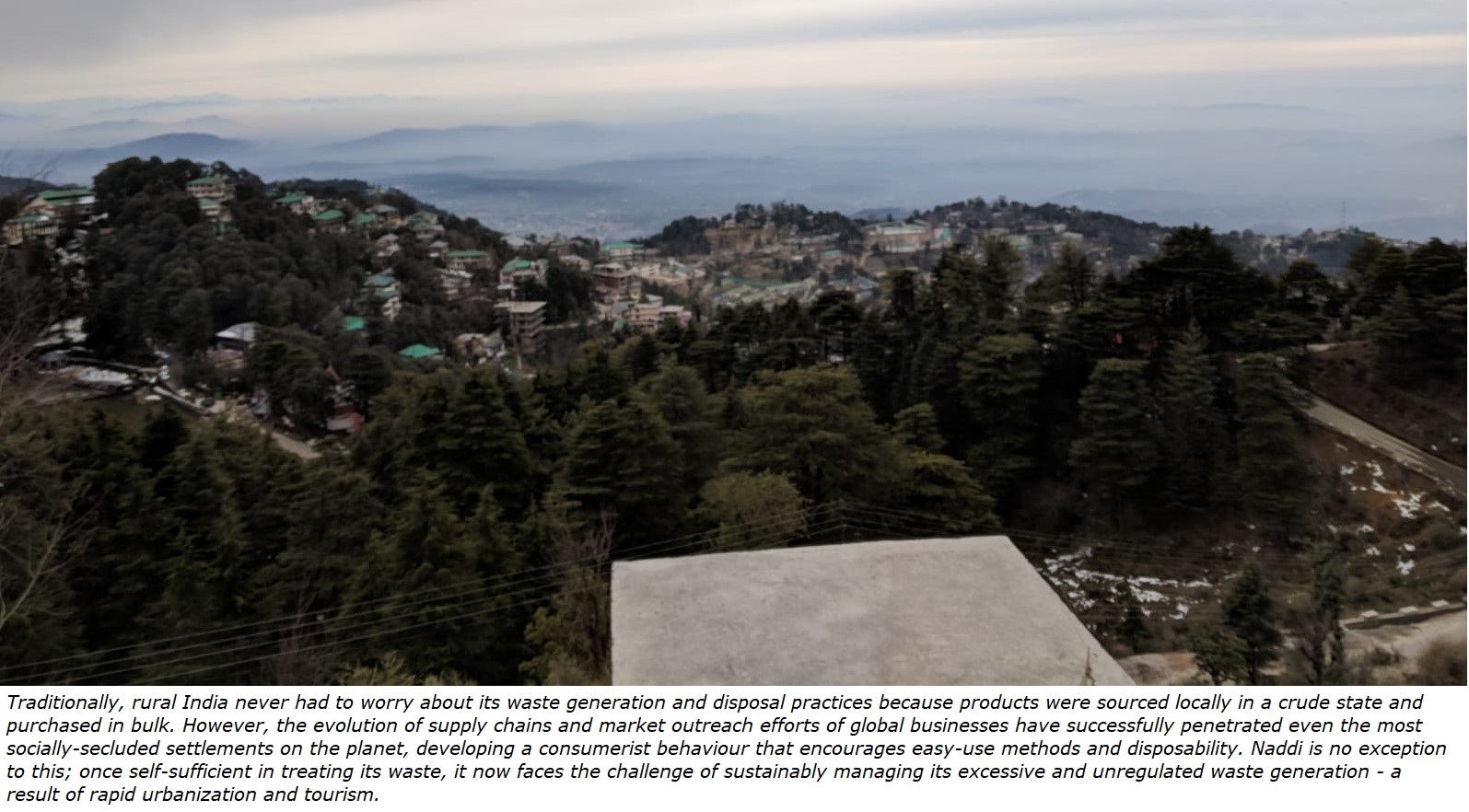

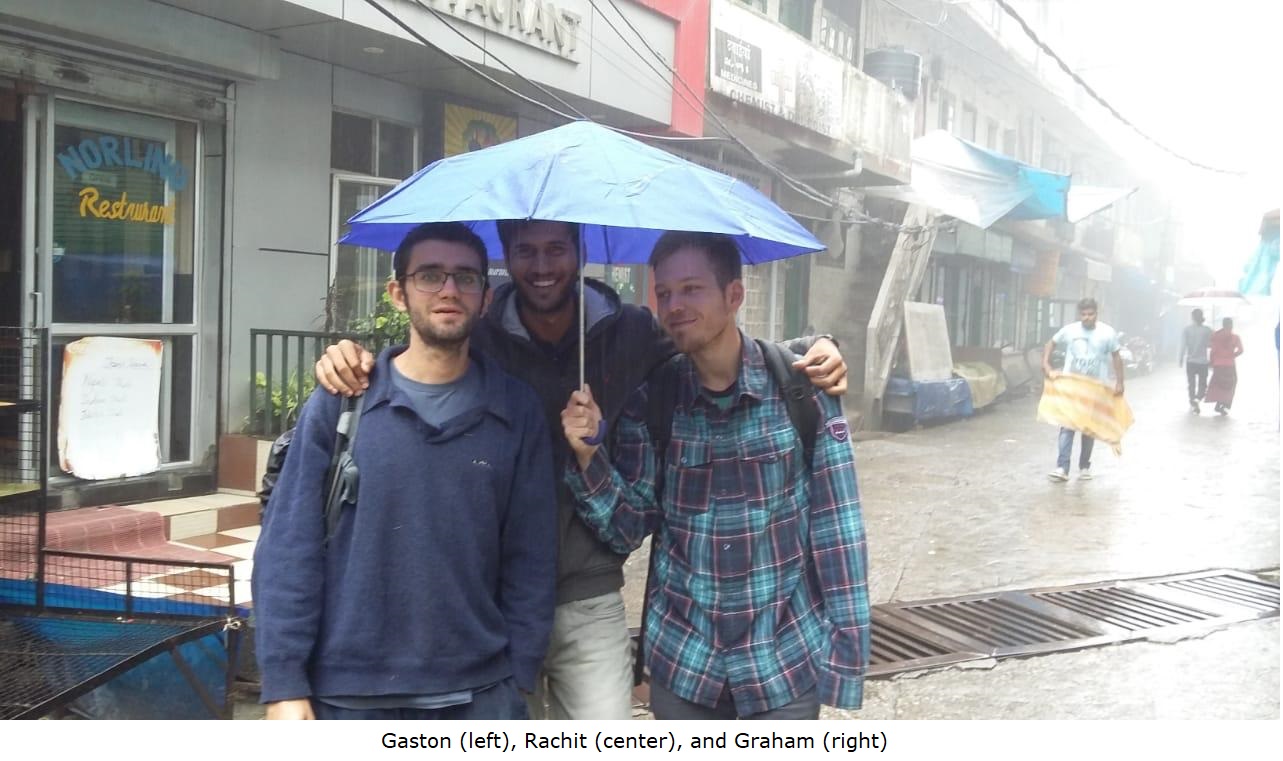
I started the Solid Waste Management project of resource recovery with my two French project partners, Graham and Gaston. At first, none of us had the slightest idea that our project would manifest into what we have managed to achieve today. After the initial two weeks of intensive research on the subject, we concluded that we wanted to design a zero-waste system for the Naddi village on the pillars of the concepts of ‘Circular Economy’ and ‘Waste is Resource/Food’. Generated waste should either enter a biological cycle where it decomposes and provides nutrients to the soil, or a technical cycle that ensures a closed-loop manufacturing system of upcycling and downcycling. Essentially, our goal was to use the waste to support the biosphere and the technosphere - a biomimetic approach we had recently studied.


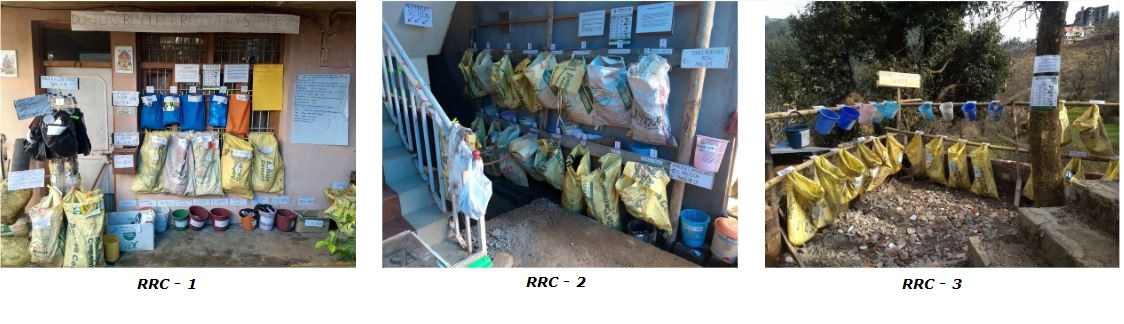
With our foundations solid and goal set, we now had to work on innovating a localized solution for this global challenge. This was the point when our Chief Director, Mr. Bhullar, introduced us to the concept of systems and design thinking, and we decided to break our goal into two tasks. First, to design a prototype of - what we now call - a ‘RRC’ (Resource Recovery Center), a platform for collection and segregation (within 30 categories) of resources. Second, to create a system around the RRC to facilitate effective and smooth collection, segregation, storage, transportation, and sustainable disposal of resources. Adopting and practicing this newly learnt approach helped us streamline our efforts, improve our focus, and see a holistic picture of what we had set out to accomplish. We were able to connect the dots and virtually actualize a systemic flow of resources from consumers to destinations of their sustainable treatment. While community engagement and behaviour change was an important component of our project, the main objective for us - as told by Mr. Bhullar - was to set up a sustainable system of resource recovery that could be continued by future interns (as it was done by Sami from Finland and Shivani from Canada).
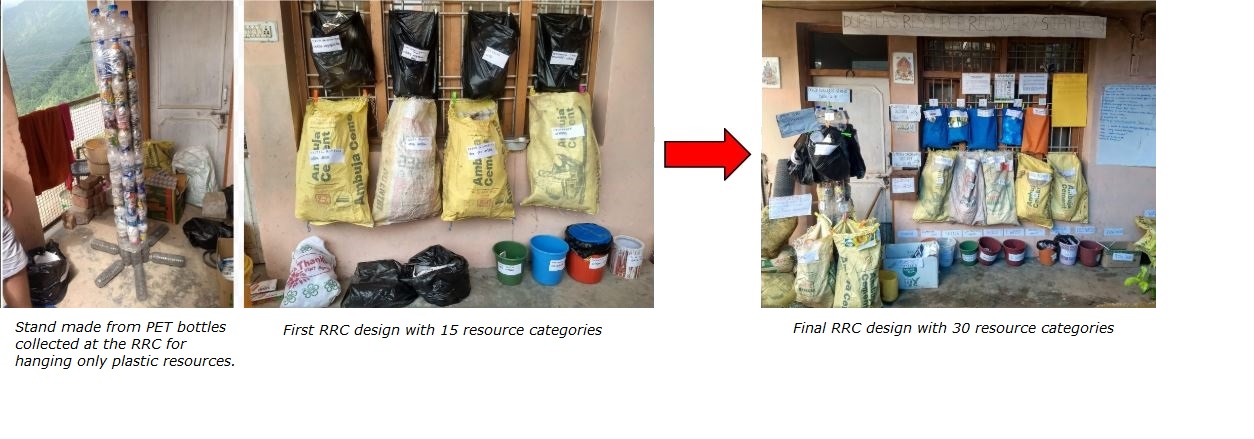

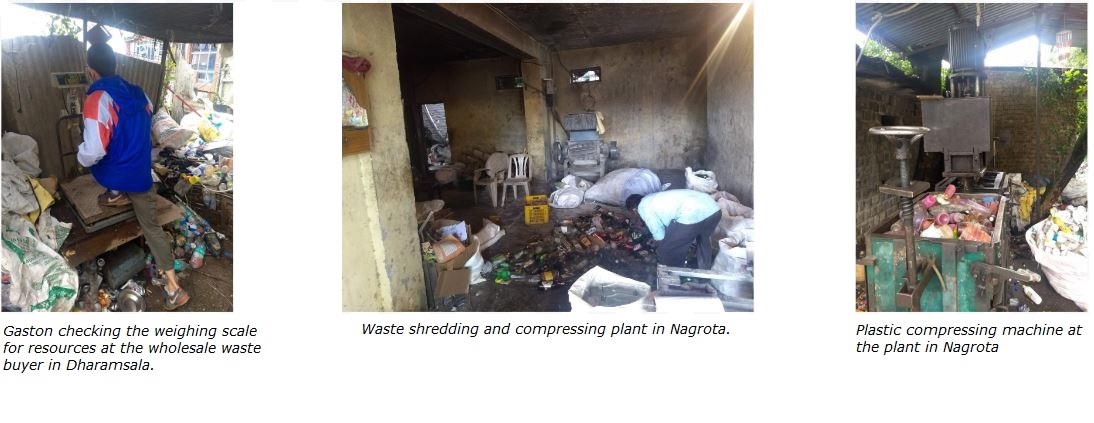
Because we had limited resources and limited knowledge in design, it took us several attempts to develop and perfect the existing RRC. It was a continuous process of design, implementation, evaluation, and amelioration - a cycle, but a forward moving one. Moreover, in order to create a system of intelligent disposal, we made multiple trips to the nearest wholesale waste buyers and recycling facilities to understand the market for the resources we intended to sell, as well as to establish a transport system with them. Not only did these trips acquaint us with the monetary value of each material, but also helped us gain new knowledge concerning the recycling industry, allowing us to better develop the RRC. 

As illustrated in the images below, all our RRCs differ from each other aesthetically but are founded upon the same model. In order to succeed, we had to be flexible with our design but rigid with its essence. We had to move away from the ‘one size fits all’ approach and customize every RRC based on the context (location, free space available, community restrictions, and the resources at our disposal). Nothing comes easy when you work as an intern for an NGO in rural India. Yet, that is a virtue in itself; it forces you to become resourceful in your work and encourages you to do more with less. Such an environment also gives rise to frugal innovation - an approach I have been familiar with since childhood, but had deeply rooted within me after this stint. What I learnt from this experience is something that no classroom could have ever taught me.


It is true that an inter-cultural environment can spark greater creativity and innovation - the outcome of our project certainly justifies it. I am glad that I had the opportunity to work with people from different nationalities and forge some lifelong friendships - I am sure that I will have couches to crash on when I visit Europe.

Rachit Paliwal
Project Manager, Solid Waste Management
Naddi Village
Educare India

Thursday, 20 October 2016

Working on Disaster Management in Naddi

Considering all the natural risks the communities we work with face (earthquakes – the fault line of the Dharamsala region passing through Naddi and McLeod Ganj, floods, landslides…), it is coherent for an organization likeEduCAREto have a Disaster Management & Emergency Planning Project to reduce the vulnerability of the population to such hazards.
To achieve this goal, my project consists in providing the communities with cognitive and technical tools in order to lower the effects of hazards.

More exactly, I am running workshops to raise awareness about disasters among the youngest through the school and the Girls Club. I am also setting up a training session for the adults in partnership with a Training and Capacity building coordinator from the United Nations Development Programme, also consultant to theDistrict Disaster Management Authority, for them to receive first-hand information about hazards and get advice on mitigation strategies they can easily implement.

The other side of the project is to build a community action plan so people can respond appropriately and efficiently in case of the occurrence of a disaster. 
This is probably one of the most challenging aspects of my project since it implies for us to be the link between the authorities in charge of the disaster management and the communities. Indeed, if the programme theoretically exists at the rural level, although the population is not aware of it, it is far from being functional. Furthermore, it has proven difficult to understand how the Indian administration operates and especiallyto identify the people in charge.The ultimate goal would be to have a village level incident response team that would be able to react automatically.

Also the monsoon doesn’t make our lives easier! But at the end of the day, the challenging environment we live in makes the job even more interesting!

Sam is ready for brave the elements


Aude Guiraud
Disaster Management & Emergency Planning Project Manager

Tuesday, 4 October 2016

Incredible India

Educare was not my first experience in India. I had the chance to spend 7 wonderful months in this country before, and I have been so marked by this culture and these people that I started looking for a way to be back as soon as possible even before leaving. One of my friends, who was already a fellow for Educare told me that the organization was always looking for new volunteers, and especially it was looking for someone to be in charge of PR and Marketing.

When I get the approval for the position, it was such a relief. I knew that I was leaving India being sure to come back and even if the things were more complicated to get my visa and it took a long time, noting could stopped me.

So I arrived in Naddi and fully enjoyed my stay with the Com Team. Spending my weeks working for the organization and my weekends enjoying my favorite place in India. Thanks to the NGO, I got the opportunity to experience a total freedom in my work, which is more than rare for a student. It makes me want to give my best to achieve the objectives in collaboration with HR, other team members or even alone.
 
But working in India does not only have positive aspects. This country definitely teaches to have patience and resignation. Oneself has to admit that the things can’t always be controlled and to let everything go sometimes. There is always obstacles, delays that sometimes pop up when working on a project, and oneself just has to deal with it. It improves your ability to face any issue, your sense of humor and teaches you to trust in a better tomorrow.
 
But it’s so worth it … I never found a country in the world where I feel at home like this one. Never met people that makes me feel better than these ones. Never been afraid of living in a place as much as this one. And I promised myself to do what it takes to come back as I did since I’m here …

Sometimes you just can’t explain why, but you know that something’s made for you. And that’s what happened pretty fast when I reached these mountains. There’s something mystical in the atmosphere that instantly calms you down and makes you feel like you belong to this place. Something that makes you feel like a better version of you, a soother one. And even if people keep in mind that India is a patriarchal nation, I never felt as free to be myself than here. It’s not about wearing short skirts or loose t-shirts, it’s about meeting people who look through your eyes to touch your soul and respect your heart. There is a strong belief here that what truly matters is to have a beautiful heart and soul. And for our own good, we should try to act more often like this in Europe.
 
Anyway, India was like a “lifesaver” for me. A place where I can truly feel myself, no matter if I am alone or surrounded by people, a little peace in a large world in war. I spent almost one year here, and I know I am changed forever. Maybe I will find another place where I feel this good while traveling. But I know that I’ll need to come back here. I have the opportunity to go directly to India after my studies and I honestly can’t think to another plan. Let’s see where the future leads me and what will be the next steps of my life…

Namaste India.


Juliette Dabe - France
PR and Marketing Coordinator

Wednesday, 31 August 2016

A SWASH intern in Naddi

I joined Educare India in may 2016, for 3 months. After finishing my studies in waste engineering, I planned to work with this NGO on waste management.

The adventure started in Naddi. Hopefully, someone was already working on waste management. That helped me to have a quick Induction. Thanks to that, we directly did activities related to SWASH :

- School workshop: we went to the governmental school in Cheni to do some workshops on waste. We played some games to raise their awareness. Each time, the workshop was a success and the kids were really engaged and involved.


Workshops in Cheni's Primary School

- Trash collection: Once a week, we organized a waste picking for Naddi's shopkeepers. This project, established by previous interns, ran for a long time. We took over the project. That consists in collecting the waste bin from each shopkeeper involved , carrying it with a truck and empty the bins in a bigger waste bin that will be collected by the municipality.


Bins used to collect the waste 

This part is not the easiest or the cleanest but sometimes it is funny. One time we arrived at the big bin but we were not able to do anything because of the monkey family who had lunch around the bin. We waited, in the truck, in front of the bin, that monkeys finished their lunch. 

Despite this fast Induction, it was very difficult to focus. There is too much to do ! You would like to do everything, but 3 months are not enough, you need to focus if you want to get things done. So you list the ideas and organize it with a priority level. After speaking with the organisation, we agreed to focus on the soft plastic issue. This waste is produced a lot and its collection and treatment are often neglected. The aim is to collect soft plastic from our house and one shopkeeper (start little but think big), clean it well and store it in hygienic conditions. The next step is to find a way to resell, reuse or recycle it. 

After collecting the soft plastic, we built a washing machine that could clean more soft plastic and faster.


Our DIY soft plastic washing machine!

The biggest part was to find the best "process" to clean the soft plastic efficiently and ecofriendly. That's mean using less water, a natural soap...

After we need to store it, waiting for something to do with the soft plastic. Some centers store the soft plastic in a cloth to create a cushion. I chose to store it in plastic bottles because it is costless and it is a way to reuse plastic bottles. if we don't find a solution rapidly to reuse this soft plastic, we can put the plastic bottles together and create a sofa!


Plastic bottle filled with soft plastic and sofa model 

Sofa, cushions or other products from soft plastic could be resell. If it is working, the project could be take over by the community because they could create money with this waste. Here is an idea to develop a local soft plastic recycling sector !

Working with Educare India made me think differently about the waste issue, with new problems and new perspectives that I had never think about before. I am happy to come back to my country with a new vision of the waste issue, it could be useful for my future job!


Coralie Rambaud - France 
SWASH Project Manager in Naddi

Wednesday, 24 August 2016

There is no such thing as comfort zone

This article is a little mix of everything that popped up in my mind when I had to reflect upon my current experience in India. I have been living in a rural village of lower Himalayas in Northern India for a few months now, working towards social and sustainable development through micro-finance initiatives and projects, in the framework of an Indian NGO.

When I applied for this experience, I did not know what to expect. From the articles I have read, India is the place where the cultural shock experienced can lead some to severe depression and anxiety. From the pictures I have checked, India is a beautiful country gathering multiple extremes – landscapes, people, smells, colors… – all in one place. From the documentation I was sent before flying over, India is a very much challenging experience. From the endless talks I had with friends and acquaintances here and there, India can be either very traumatic or incredibly marvelous. I therefore ended up having mixed feelings about living in India for a few months, low expectations if any, and one overwhelming urge I couldn’t repress: going there, no matter what, for multiple reasons – experiencing something different from any perspective to challenge myself deeply being the main one I guess.


Fifty shades of outfits: India is partly famous for its bright, flashy, overwhelming colors that turn your perceptions upside down

So I did. I believe the first obvious striking thing in India is the standard difference with the Western industrialized countries that deeply highlights the meaning of comfort zone. Bugs everywhere, daily internet, power and water shortages, sketchy housing, antiquated transportation facilities, strong language barrier, farm animals enjoying your rooftop or terrace while you are working there… The simple fact that comfort is gone for real makes you break out of your comfort zone whether you want it or not. Then, there is the framework I am evolving in. Most of NGOs are grass-root level structures that require a detailed understanding of the community needs in order to work properly. You have to meet the people you are going to work with, talk to them, understand them, and assess their needs and wants not only to define the scope of their problematics, but also to reflect on your options, resources, and abilities to impact them within a sustainable perspective. You are your own manager, entirely independent, and it is all up to you to make the most of your time here.

All of the ideals and hierarchy patterns we are taught and raised in back in our traditional occidental universities or schools seem outdated, misplaced, and irrelevant here. The working style you have acquired so far, and the bubble it’s lingering into can do nothing but blow up out here. You have to think out of the box to cope with a contradictory situation: making things work in a long-run over here, even though being here for a very limited period of time. You have to be innovative and adjust your strategies and approaches towards the people you are working with. You have to attempt, fail, and start again with an improved methodology. Rethink everything you thought you knew, observe and analyze situations to come up with matching projects and processes. Basically, forget everything you knew and learn again.

Traditional flour making: girls of a Himalayan village pounding wheat grains to prep flour, the base ingredient of many Indian dishes, before monsoon starts.

I now must say the comfort zone I had back home is far from me right now, but I do not miss it, as I created a new one here. I enjoy being challenged every day, meeting the community members and listening to their stories, their needs, their lives. I enjoy perfecting my working methods towards them over and over again, and managing an indefinite number of stakeholders that keeps growing whenever an initiative is successful. I enjoy encountering new types of issues raising new ways to improve my social managing skills.

At the end of the day, India not only challenged nor strained me, it grew on me. I have evolved in the way I cope with a given situation. I now believe I can create as many comfort zones as I like to. It is up to you to feel home wherever you are. By taking time to change your perspectives and beliefs, you open yourself to new possibilities and ways to learn. My father used to tell me “there is no problem, but solutions”. Daddy, you were halfway right. This experience taught me there is indeed no problem, but opportunities, taking your statement to the next level. Each issue does have solutions but more than anything else raises opportunities that people have to seize.

When I applied for this experience, I did not know what to expect. When I wake up in the morning, I do not know what the day is going to bring up. But what I do know, is that when I am back in France, I will look for another amazing lifetime experience such as this one, and be grateful for the chance I had to go to India, and break out of my comfort zone in so many ways I realized there is actually no such thing as comfort zone.

Beauty is everywhere you want it to be: the colorful merging of traditions, globalization & wild landscapes can be as surprising as peaceful

Marine Cabrol - France 
MicroFinance Project Manager in Naddi 

Saturday, 6 August 2016

A dreamer with the feet firmly on the ground.

It is a fact that when someone chooses voluntarily to work for an NGO does it for personal motives. Although for some reason, it is easy to forget that in our freedom of action, to work for an NGO in a foreign country requires adapting ourselves to certain rules and ways of acting.

Before enrolling myself within EduCARE India my personal and professional expectations were far away from where they are nowadays. I thought that in an already established relationship between the NGO and the community I was going to be able to create artistic and creative workshops for the community within my project for the NGO.
After my first week in Rait (Himachal Pradesh) in which I observed how other members of the team worked, I realised that there was almost no community engaged so consequently projects running with difficulties. This statement does not only reflect an issue but unrealistic expectations from my side and an incoherent action plan proposal.
Is it the lack of verbal communication the cause of the problem? Is the strategy for engaging community what it is failing? Is it that community does not want to work with people coming from Western countries? Lot of questions came into my mind since I arrived but none of them well enough formulated under EduCARE premises.

After uncountable number of productive meetings, brainstorming and informal conversations with the members of EduCARE for the past two months, I understood that expectations should be according to the context; otherwise they are not expectations but utopic dreams.


Meeting in Naddi

How good you know the NGO and how it operates?
In the daily living within the community we discovered that members of community do not really understand what EduCARE volunteers/interns are doing in the villages. It is known we work for an NGO but what does to work for an NGO really mean? EduCARE India works with concepts such as Sustainable Development, Social Entrepreneurship and Social Innovation, Systems and Design Thinking, Grass-roots level community engagement, Community empowerment. Prioritises learning over anything else; and promotes to project and act locally under a global approach (very roughly said).
Without knowing the meaning of these and more concepts the NGO work with, the way it operates and its scope it is difficult to get a complete understanding of what, where, when, why and how we and our projects should be managed for accomplishing positive outcomes as individuals, as part on an organization and as citizen of a global world.

How good you know the community?
Talking from my experience, I came to India as individual wishing to be able to make a difference on the quality of living of the village population, then I found that I did have almost no idea about Indian way of living, Indian culture, its languages, its religions, and so on. How possible is to create a successful socio-cultural project for an almost unknown culture? Now I am allowed to say that it is practically impossible.
To work for a community or even just for an individual a deep knowledge about its/ their needs and wants is required. Before creating a project proposal is needed to make an exercise for ourselves and ask to us what are the individual/ community needs? Do its/their needs match with the global needs? Then, and only then, the scope of the project will be better adapted for the change.


Women from the community

How good is a project to make the difference?
The goals and objectives of my initial project proposal are another incoherence to add to the list of false expectations. As Rome was not built in one day we cannot expect to change the vision of a whole community from one day to the next one.
If I have seen we have certain issues in the way we run some of the projects and the way they impact in community is because we pretend to make all changes at once. We are told from EduCARE ‘think big, do small’. My dreams and ambitions did not allow me to see that the sum of many small steps marks a path ahead where there was none existence before.


Taking all these things into account might help to create more realistic expectations and better outcomes of our experience and our projects; otherwise, frustration and demotivation might become part of the Indian experience, and as I always say and repeat to myself ‘there is no need to suffer’.


Emma Gutierrez - Spain
CCC project manager in Rait

Wednesday, 3 August 2016

Health in Naddi

This is my second time in India and I was prepared to be flexible, expect power cuts and among other things. This has been the first time I have been to northern India and is very different from my time in the South of India. This had prepared me to adapt to change but I was not prepared for the Cheni stairs or what interns call affectionately as “Death stairs” which test my fitness levels every day. 

In my first week in Naddi not knowing what I would be working on or what I will do, seeing one constant thing was accidents. These accidents ranged from small scrapes to bigger types of accidents. I quickly found out that there was no hospital or medical facility in Naddi. The medical facilities located in Dal Lake are a ten-minute car ride and the Zonal hospital in Dharamshala is almost thirty minutes away. This can be fatal if injuries are life threatening or urgent medical attention is needed. This can have an adverse impact on family, friends and the community. This can affect the economic mobility for families also due to death of the main breadwinner in the family.

Curable diseases such as diarrhoea and other infections can be life threatening if treatment is not given or the lack of access to a medical facility. These are important in living a healthy life without worrying about where the closest hospital or medical facility is located. People in the village find alternative ways to get to a hospital through the kindness of people in the community to help each other out is something that is invaluable and can save a life. This is what I have learned in my time here in Himachal and the warmth of the community here is immeasurable. 

View from Naddi

Shirly Kumar - Australia
Centre Coordinator in Naddi

Tuesday, 19 July 2016

Photovoltaic Solar Panel System Project

With EduCARE, some interns already did few projects in alternative energy to have a way to produce clean energy, and without harmful effect on the environment and the people, like biogas station, solar heating water system, windmill system... Studying electrical engineering in France, I wanted to provide to Educare a new way to produce energy (and especially electricity), that Educare still didn’t have implemented. So I it’s all naturally that I proposed a small PV solar panel project, to provide electricity to the Naddi ReStore.

Why in ReStore?

The ReStore in Naddi had no way to have electricity power, and therefore, no way to have light during the night, or to run electrical cooking device. With the PV solar panel system, ReStore is now fully electrical autonomous, and able to run cooking device such as blender and so facilitated the work of the girls, to charge small device such as Smartphone or small speaker, and so make the job for girl more comfortable, and to run an LED light and so open lately in the day or also during the night. For the future we are also thinking to provide a free internet Wi-Fi to ReStore customer to attract more people. 

PV solar panel installed on the roof of the ReStore


For whom this project is it for?

One of the main goals of this project is to make the job more pleasant and more comfortable for the girls. But with this project, my objective was also to show and present this mean of electricity production to the people and the community, create an interest in people for solar electricity production. The last goal of this project is to provide a base of documentation for other intern who would do this type of project in other center for future project, and therefore not have to have strong knowledge in electricity to install a PV solar panel system. 

But how does it work?

About the technical part, the system is very simple, the solar panel transforms the solar energy in an electric energy, and the energy is store in a battery. To control the flux of energy between the PV solar panel and the battery we use a small controller/regulator. And then we can directly use the energy thought the battery to run light and small device, or use an inverter to use bigger device (220V).


Synoptic of PV solar panel system


Thomas Lecomte - France
Alternative Energy Project Manager in Naddi 

Tuesday, 21 June 2016

Home away from home

Beginning of June 2015: After 28+ exhausting hours of travelling I finally made it half way across the world! Standing in the scorching heat, I spotted my suited driver holding a ‘Ms. Sheth’ placard. Off I went to my ritzy hotel. When I arrived, the staff welcomed me with overzealous ‘Namaste’s’ and ‘How are you?’s’. Travel weary, I was in no mood to talk. As soon as I entered the suite, I drew a bubble bath and dimmed the lights to ‘relax setting.’ I thought ‘Well, this will be one hell of an easy adjustment.’

Flash forward 4 days, I’m now in the Himalayas in the middle of a place that has the address ‘Naddi, Near Bus Stand.’Ok, so not only do I have no idea where I am, neither do the residents of this village. Oh and there’s a cow pooping next to me. Cool. Great. Where’s my welcome drink? 

I was stranded in the middle of the Himalayas, hauling a large suitcase—the size of which could fit my body into—with the sun beating down on my back, and temperatures approaching 100 degrees Fahrenheit. I lugged my suitcase down the unpaved, rocky path ventured by moving animals and their feces. Every step I went down, my heart beat faster and faster. Soon, I was sufficiently disoriented, and my mental sanity was about to explode. ‘Sh** what did I get myself into. Holy hell Tulsi, you think you’re Mother Theresa? What’s your problem in life?’ I was just about ready to throw my suitcase off the mountain until I heard someoneyelling “Hi Tulsi!! Hi Tulsi!!” Confused as to where the voice was coming from, I continued to walk down the dubious path. 

My mind was frazzled, my bones fatigued, but my eyes finally saw the girl who was enthusiastically screaming my name—Savita Meen. Her long brown hair, radiant smile, and beautiful brown eyes were enchanting. Savita’s physical beauty was only overpowered by her charisma—quite the sight for my weary self. Unfortunately, my mind was still completely elsewhere to appreciate that at that moment. As Savita showed me her quaint home, my throat started to close and my eyes began to swell. We quickly made it to my room that also functioned as her sister’s, Sunita’s, sewing room. I held my tears back while seeking the right words to say, I choked ‘Thank you for showing me around, everything is great!’ 

Alone in my new room, hundreds of flies swarmed around my face—great. I burst out into tears. Again a series of rapid-fire thoughts zoomed through my mind, overwhelming me and causing me to sit. 4 days before I had breakfast made for a king: the choice of 100 dishes and an omelette bar, and now I’m with a family burning sticks to prepare a standard meal of rice and dal. 

I cried myself to sleep that night. I woke up in the morning not feeling much better. I told myself, ‘Either you can go home and end up regretting everything or you can suck it up and do what it is that you came here to do.’ I sucked it up. But by the end of my first week, there was no despair that I needed to ‘suck up.’Savita’s family became my family. Every aspect of them and every stick that was used to cook our food I fell in love with. I was happier than I was at that omelette bar. No hate to the omelette bar, but in retrospect I believe this was the beginning of my journey towards understanding happiness outside of materialistic possessions. I spent a few weekswith the Meen family before moving into our NGO’s house just up the street. My time and experiences in Naddi and with the Meen family were quite extraordinary, and deserve far more space than I can give them—however, that is for another time.

My perspective on life and India began to change drastically. I had only experienced a narrow version of India—my extended families’ secured, Bombay lifestyles and the swanky hotels we visited. It was quite perplexing, with a dash of irony, that despite being of Indian descent I was oblivious to all of India’s colors. Every week, I exceeded my emotional limit. I kept witnessing things that I thought would only happen in movies- young girls chasing their cows down the street and others carrying buckets of water on their heads. I thought that my efforts would lead to no avail, and even if I could do something I wouldn’t know where to start. I realized that I to take a step back and take in the whole picture, to understand how I could address the needs of the community and create measurable change within it. As I learned, it’s a picture easy to lose sight of. 

In many ways, I think the Naddi community gave me more than I gave them. I remember walking up the main road with a 3 lb. wooden board for ourlocal shop. But I was wheezing by the time I got to the main square. As I searched for my breath, I heard a mischievous giggle behind me. The giggle continued. I look behind and its Mamaji aka Savita and Sunita’s mom bearing the biggest smile. “Hi Tulsi!!” she lovingly says. Her right hand was holding the bottom of her headscarf that she was innocently chewing, and her left hand was effortlessly placed on the side of a 40 lb. haystack sitting on her head. ‘Well I’m a total loser. Panting while carrying a wimpy piece of wood, while a 50 year old is running around with a forest on her head.’ While humorous, this encounter helped showed me that no matter how much I improve and how much I learn, there is always something more I can do to be better than I was yesterday. The strength, love, and happiness that the community members taught me are true blessings. I’ll never forget them.

EduCare’s philosophy avoids the classic paradigm of imposing Western thought processes and value systems on groups receiving aid. Rather, it aims to provide a context-based understanding of people and their circumstances, leveraging them to foster individual empowerment. This organization has provided me with endless opportunities and challenged me in ways that I didn’t think were even possible. It helped me understand the boundless nature of human achievement. Bring any idea you have come to life! All you need is a cupful of humility, a spoonful of introspection, and a sprinkle of imagination. 

Hopefully I’ll be seeing you soon near a bus stand in the middle of nowhere.

Tulsi Sheth, USA
REstore Project Manager - Microfinance Project Coordinator


Tuesday, 7 June 2016

One of the highlights of my internship in India was visiting Amritsar.

We got up at 3 AM on Wednesday to get to Dharamsala to get our bus at 5 AM. It’s about a 6 hour ride but on a government bus, which means its literally like rows of benches and super crowded. Amritsar itself is just a typical busy, dirty, dusty and underwhelming Indian city but it’s also home to the Golden Temple, the holiest site in Sikhism, the religion of most Punjabis. The Golden Temple is AMAZING and so beautiful, its like stepping into another world when you get inside the complex. You approach the complex and everything becomes marble and immaculately clean (weird) and you have to check your shoes and socks (they aren’t allowed inside the complex even inside a bag) and cover your head (men too) and then you walk through this shallow pool of water to wash your feet and then into the temple complex.

It’s full of people 24 hours a day but it’s also so peaceful and quiet, except the hushed sounds of lots of silent people milling around and praying and the gurus inside the temple singing/chanting prayers over this loudspeaker. I spent hours just sitting on the marble on the edge of the water (which is holy water and the men bathe in it in their underwear and the women can too but they have to go in this covered section). Then you can get into the line to go into the temple itself and you get inside and it’s so crazy and ornate (also warm, I cannot even imagine what it’s like in there in the summer) and when you get out of the temple they spoon a scoop of this stuff that looks kind of like dark brown oatmeal into your hand and it tastes like sugary whole wheat flour mush and you’re supposed to eat it and then rub the oil from it on your face. 

We stayed there for free, they have what are called “niwas” which are giant hostels essentially that are free for Golden Temple visitors. You just walk into this giant courtyard just next to the temple complex and if you’re foreign this really nice Sikh guy comes over and brings you to the “foreigners room” which is basically a small section of the niwas that is a bit more private. There’s one big room with a bunch of cots and then four or five smaller rooms off it that each have three cots in them, we stayed in one of the smaller rooms (challenging to get four people onto three cots). There’s a bathroom with a tap and sink and bucket to shower in the big room but then for the toilets you go out into the courtyard and there two-story toilet “halls” with the most toilet stalls I have ever seen in one place. The whole place is full of giant rooms with cots and there are so many people that at night the whole courtyard is full of people just sleeping on blankets on the ground

The most amazing part of all of this is the Langar (which just means food in Punjabi) hall. You enter through the temple complex and you walk through another foot pool and then you walk up and a guy hands you a plate and then another guy hands you a spoon and then another one a bowl and then you shuffle into this enormous room with really long thin mats lined up in rows and you sit down on the mat and then these guys come around with baskets of fresh chapati, buckets of dal (lentils) and subjee (Indian mixed vegetables) sometimes rice and then either something similar to what they give you when you leave the temple or like a sweet rice pudding type thing. It’s totally free, and you just eat as much as you want and then take the plate down and hand it to someone and they pass it along this assembly line to like 100 people who are doing dishes. And next to that there are 100 people cooking in these absolutely enormous vats. Apparently something like 40,000 pilgrims eat there a day. I loved it, the food was incredible - I ate every meal there.

The whole temple, niwas, langar experience was absolutely incredible, I loved it so much.

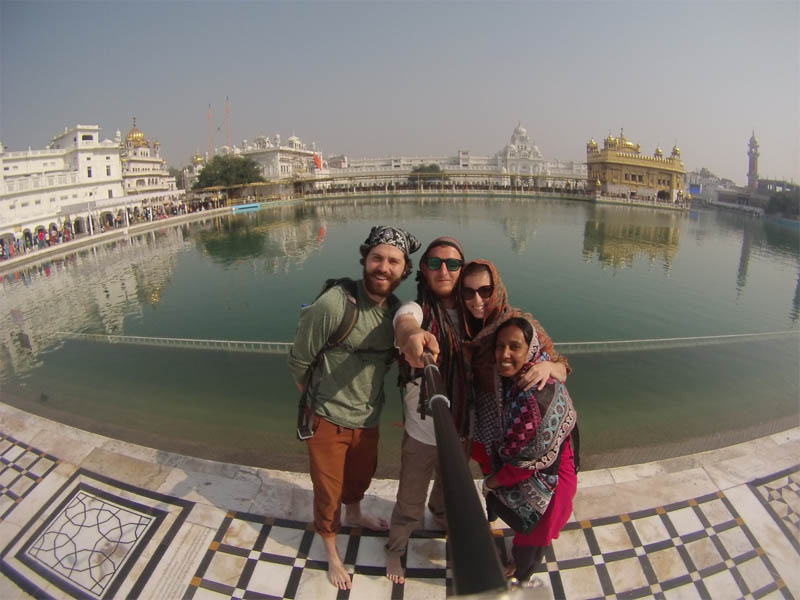
Part of Naddi's team in the Golden Temple


Kyla Korvne - USA
Women's empowerment Project Manager/ Centre Coordinator in Naddi

Monday, 9 May 2016

The multiple colors of India

My experience in EduCARE started in the beginning of September 2015, in the rainy monsoon season and in one of the rainiest place in the world, Dharamsala. I arrived in this little village called Naddi and I was delighted by the amazing view on Himalayan Mountains and the Kangra valley. Since the first second there, I felt in a place welcoming, calm and serene. Apart from the crazy rain that could start without warning you and last for hours and hours, the first days in this peaceful village enchanted my senses. People are very nice to you: they don’t hesitate to invite you for a chai or a dinner at their house. These first days surrounded by warm and welcoming people made me feel already like at home.

My first months in the organization were very special to me, I was discovering more than India in itself. By many ways, the internship I did was a first experience for a lot of things. It was the first time I worked abroad, outside my home country. It was the first time I worked in an NGO. It was the first time I lived with a roommate and in an interns’ house. It was the first time I stayed a long time away from my family and my friends.

Meeting the other new interns during the induction and spending some time together made me realize that EduCARE is more than an organization, it is a family welcoming people from all over the world: Italy, Spain, Portugal, the United Kingdom, Canada, the United States, etc. Sharing my experience with other interns from different countries around the world was a gift. Living with the center interns made me discover and appreciate life in community. Enjoying free time with my roommates and the other interns, partnering and collaborating with them on different projects, supporting each other: it was amazing to do all these things.

This internship in EduCARE has been also the opportunity for me to travel around India. Working in EduCARE allowed me to get to the other centers of the organization and to enjoy the different tastes of North India: doing a camel safari in the hot and dry Thar Desert in Rajasthan, walking in the noisy and crowded streets of Punjab while enjoying Bhangra (local) music and trekking in the freezing Himalayan range. I particularly enjoyed the different outdoor activities offered by the Himalayan Moutains: it was awesome to be able to do trekking and hiking in these outstanding landscapes.

During my holidays, I experienced most of the beautiful sights that North India can offer: palaces, forts, tombs and plenty of temples. During my travels, I also enjoyed urban India with the crazy Delhi and the outstanding Mumbai, which were good breaks from the countryside. Particularly, these travels made me discover how diverse India is: rural and urban, Hindus, Muslims, Sikhs, Christians, Buddhists and Jains, dry and humid, cold and hot. I never saw this much diversity before and it was fascinating that all this diversity was standing in harmony.

I enjoyed a lot being an EduCARE intern. These eight months with the organization were very intense and every day was giving me a different experience from my internship in India. I thank all the people that I met during my internship, all the EduCARE interns, Naddi villagers, Naddi interns and the other people I met in India for making this experience unique. Meeting people from everywhere in the world, contributing to rural development, challenging myself with project management, enjoying Indian cultural diversity and spicy food, experiencing the crazy but also incredible country's sights, and, last but not least, living by myself far from my home country. In a nutshell, I would say that I learnt more in eight months of experience than in the rest of my life:
"You cannot create experience. You must undergo it" (A. Camus)


Kevin Sundareswaran - France
SWASH Project Manager / Project Coordinator in Naddi

Wednesday, 4 May 2016

Leaving India

I always knew that this internship would give me a chance to learn and have new and unique experiences, but I was surprised at what I became to know about the most. The thing I learned about the most while working for EduCARE was in fact, myself. 

Of course, the internship is about community engagement, practicing sustainable development and sharing knowledge with others-but for most of us, it becomes much more than that along the way.


I got to know more about myself than I ever expected. The frustrations, the challenges, the constant nausea and diarrhea brings out parts of you that you don’t like or try to avoid. But in India, when there is no power or water or horrible and unavoidable weather, you sometimes can’t escape these parts of yourself. When this happens, you begin to learn how to adapt or how to react in situations. Then, after time, you begin to realize some parts of yourself that are really great. You realize you are an innovator, most certainly a problem solver and have more ideas, knowledge and definitely patience, than you ever thought you were capable of. 

On a more narrow point, I got to learn specifically about microfinance in the field. Traditional microloans and microsavings is not the only way to conduct microfinance in developing countries. I understood quite quickly that sometimes the most effective ways of doing a project are not the most efficient or traditional ways of approaching ideas and projects. It could not be truer that flexibility is essential and the key to succeeding in any projects attempts. Even while keeping this in mind, you will almost definitely fail at some stage. Of course we are constantly told failure is good and it takes time to accept this but its true. The constantly failing and mistakes is often what gives you inspiration for better ideas or alternative solutions. So what I’d really like to say is thank you. 

Thank you EduCARE for giving me so many opportunities to fail :)


Breanne Jury - Canada
Microfinance Project Manager / REstore Project Coordinator in Paro and Naddi

Saturday, 16 April 2016

A sad but fond goodbye

Six months ago my Internship with EduCARE began and now I’m on the way back home to England! As with everything in my last days with EduCARE and in Naddi; I’ve definitely been stalling knowing that my internship and the times with my wonderful Naddi family will soon be over, so this blog post is the end point of an amazing Indian adventure.

During my six months I’ve created so many memories and had crazy experiences that I’ll remember a life time! I thought I’d use this blog post to share some of them:

Sick in my Shoes

In October I was on my way to Delhi on an overnight government bus, after about an hour or so I managed to drift off to sleep whilst my Tibetan neighbour was continually vomiting out the window because of the bus drivers mental driving! At 3am I wake up and the bus has stopped for a short break so I decide to get off the bus to stretch my legs and use the toilet – stupidly when I went to sleep I’d taken my shoes off and left them underneath my seat. So as I put my feet into my shoes, I notice one of them is wet… and well, you know the rest of the story – disgusting certainly didn’t justify it. Only in India can someone be gross enough to throw up in your shoes and then say nothing as you put your feet into them.

A Holy Baptism

I was walking from the Indra intern house in Naddi to the main square to go to Omi’s for lunch, one particular part of the path is always slippy and has water on it. Clumsy me decided that this day was the day to completely stack it! I ended up lying in the field below half under barbed wire, half in a field and covered waist down in a combination of mud, cow poo and water. Only in India is being covered in cow excrement seen as a good thing.

Animal Encounters

o Raging Bull Being charged at not once by twice by an angry territorial cow in the Jaisalmer Fort.
o Stray Dogs Constant accosting on the way to McleodGanj.
o Cheeky MonkeysBeing completely surrounded by Langur’s on the walk home from Triund and having no idea what to do!
o Monsoon Critters Providing my feet as lunch for many a leech whilst in Shenney during the Monsoon.


Transport Frustrations

As a student in India utilising the cheapest transport option was always my go to, however this incurred many memorable moments:
- Never being sure whether a bus was ever going to arrive, let alone arrive on time.
- Driving from Naddi to Dharamshala and fearing for your life because the driver seems to have forgotten about using their breaks and official speed limit.
- Using overnight buses to get from A to B and the bus driver plays consistent Bollywood and Hindi music all night at full volume when you’re trying to sleep.

The start of a long 36 hours traveling from Naddi to Khuri.

My favourite method of transport, Tuktuk!!

Christmas in Kerala 

Kerala is somewhere I’ve always wanted to visit, so when myself and Siobhan decided our Christmas Holidays would be spent there I was over the moon. Whilst it certainly didn’t feel like Christmas in 30+ degree heat surrounded by sandy beaches and palm trees, the opportunity to experience a complete contrast to North India was amazing. The South of India is a land of chilled out people, amazing food and beautiful scenery and a great choice of location for a deserved rest!

Alleppey Backwaters

Fort Cochin
Khuri and Jaisalmer 

In October, I was fortunate enough to venture out of Himachal Pradesh and visit Rajasthan for 9 days during the coordinators retreat. Whilst the hot desert weather was something pale and ginger me hated, the Rajasthani lifestyle and culture was so so fascinating. The retreat was culminated by us all taking a camel ride (a very painful and jolty camel ride) into the desert for a night under the stars.


These are just a handful of the memories I’ve made and it’s a shame they have to be put on pause until the next time. But I’ll be back, Naddi is certainly not a place you can forget in a hurry!! And as for EduCARE, it’s been a crazy up and down ride but I’ve loved every second.


Rebecca Lewis - United Kingdom
Disaster Management and Emergency Planning Coordinator in Naddi