Showing posts with label volunteer. Show all posts

Wednesday, 30 March 2022

Creating a Task-force of Youth Volunteers for Disaster Risk Reduction and Emergency Response Preparedness

EduCARE India chose to scale down most of its projects to focus on covid-19 response in early 2020. The NGO continued to invest heavily on mobilising youth volunteers for Creating a Task-force of Youth Volunteers for Disaster Risk Reduction and Emergency Response Preparedness. 


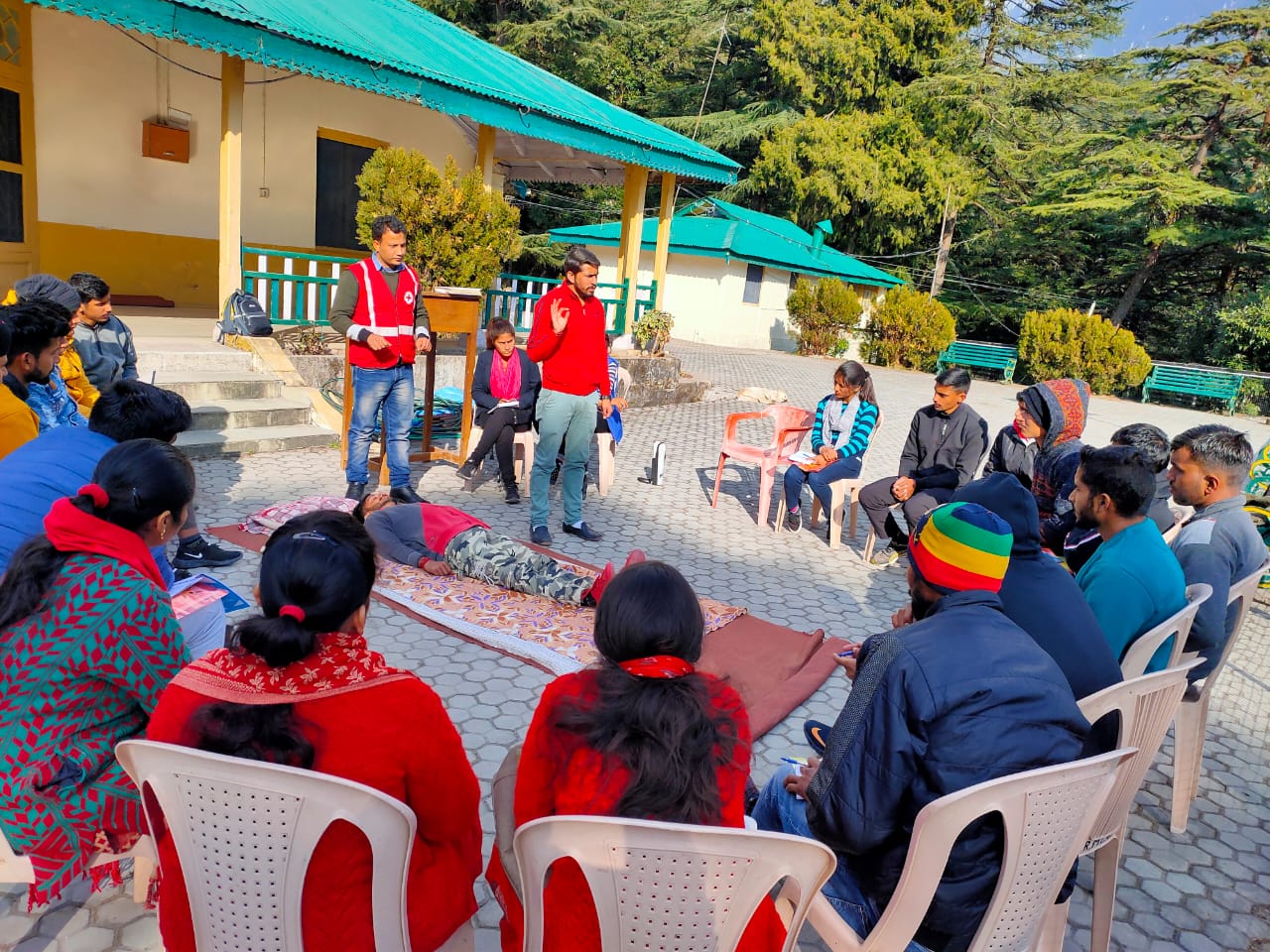
Through early 2020 to early 2022, a total of about 5000 volunteers were trained in various skill-sets (Basic Fundamentals of Disaster Management, Volunteering, Emergency First Aid, Search and Rescue, Basic Fire Fighting) at our  Centre for Environment, Health and Safety at Kangra in association with Disaster Management Authority and the Red Cross Society. 


Some of these volunteers then went for a 2-week Advanced Search and Rescue course to Regional Mountaineering Centre, while a few select others were then sent for  advanced training to NDRF (National Disaster Response Force for their ToT (Training of Trainers) on CSSR (Collapsed Structure Search and Rescue).


Sunday, 21 July 2019


As I have travelled through India I have been intrigued with how resilient the Tibetan people are and have been through out history. I will leave the deep seeded historical details for academic historians, who have more knowledge that I, to write about.
My interest comes more from a social and community interest and peeked more as I have been staying in Dharamshala, McCloud Ganj, the location of the Dahli Lama and the Tibetan exiled government in India.
This is recent history, I was barely a toddler in Canada when this was going on. Following a decade of political turmoil which started with the invasion of China into Tibet, the Chinese overthrew the Tibetan government. The Dhali Lama, on a self imposed exile, took refuge in India, with his government and over 100000 Tibetan people following.
This year marks 60 years since the Tibetan government went to India in exile, and during these six decades over a million Tibetan people have been killed, and hundreds of thousands of women have been killed, sterilized or forced into abortion, by the Chinese government. Many Tibetan citizens have been murdered for speaking out, in their own country, which continues to be under Communist Chinese rule with no freedom of religion, speech, or press.
Somewhere in the neighbourhood of 6000 Tibetan monasteries have been since obliterated by the Chinese and they have harvested the Tibetan natural resources to near depletion. Over 80% of the Tibetan forests have been destroyed, and large amounts nuclear and toxic waste have been disposed of in Tibet, the starting point for all 10 major rivers that run through the rest of Asia.
The turmoil of the 50’s you would think would be insurmountable but the Tibetan people are not only physically resilient from living in such high mountains with such difficult conditions they appear to be mentally resilient too, to have survived such torture and loss in their country, invaded by China. But it has gotten worse, since that time. The Chinese government policies have almost completely destroyed the Tibetan culture in Tibet. Chinese is now the official language of Tibet and only one in seven people are Tibetan, with the number of Tibetan people continuing to plummet.

The Norbulingka Institute – textile learning.

In India, the Tibetan people face unreasonable economic and social circumstances. They have not been able to identify as refugees, which they are, but rather on paper, in India, Tibetan people are considered as foreigners. They are not allowed to hold government employment and in some cases Universities will not allow Tibetan refugees to enrol. Some say this is the Indian Government’s way of being sensitive to not try to assimilate the Tibetan people. Some Tibetan people living in India say not having citizenship in India causes extreme difficulties when trying to migrate as many countries are not open to refugees from Tibet, while others stay in India and strive to keep their culture alive. Even with unspoken pressure (from family and friends) to take refuge in other countries can be overwhelming to some Tibetan refugees in India.
I visited the Tibetan Cultural centre a few weeks ago and I was truly impressed with how that institute continues to teach Tibetan culture so that the younger generation can carry on. The young people attending that institution were amazing, not only with their craft but their philosophy of working toward a better future while continuing to highlight the Tibetan culture.

Norbulingka Institute – crafts painting room

The Dahli Lama, the spiritual and political leader of Tibetans, an icon, in this world, has and continues to carry the message of peace, supporting and blessing hundreds of initiatives to make life better for the people of this world. Locally, in India, he brings this message concentrated for Indians and Tibetans alike. In fact the Dahli Lama calls India his second home. The Dahli Lama’s foundation has contributed one half a million Indian Rupees to the Indian Medical Association’s facilities.
Recently the Women’s association of Dharamshala has worked with the Tibetan Nun’s on the issue of taxi safety by creating a Woman’s Taxi Service, Pink Wheels Taxi. This service should be available within the year in McLeod Ganj, where most of the Nun’s require taxi service. The Dahli Lama has blessed this initiative.
I have spent the last few months travelling in Asia and have met and seen people in some very impoverished, overwhelming circumstances but the Tibetan people in India, also in some very impoverished circumstances, seem to have a way to make you feel like there is hope for all of the world. It seems through the belief and blessings of the Dahli Lama, they manage to carry on, in spite of the physical and emotional scares from the past.
I have enjoyed my time in India and will miss the cultural experiences and my new found friends when I leave. I would like to come back to India and take a more exploratory look at the Tibetan’s plight as refugees.

Leann, July 2019

Sunday, 24 June 2018

Developing micro-scale concentrator photovoltaics


Developing micro-scale concentrator photovoltaics
Concentration Factor
Renewable Energy

After completing my master’s degree in mechanical engineering in the UK, I came to intern at Naddi as part of the EduCARE team. I planned to only spend a month and a half interning, so I came with preconceived ideas of what I wanted to build and the components required. Hence, I set forth on designing a micro scale concentrator photovoltaic system (CPV), this technology generates electricity from sun light and uses lenses and curved mirrors to focus sunlight onto a solar panel. CPV technology has been used to improve the power output of a solar panel by 350 times, however on the budget and time constraints my aim was to double the power output.


Within the first couple of days in Naddi, I discovered that solar power was currently being used by the majority of the street lights in Himachal Pradesh (HP). Every solar street light used a 40W solar panels and 40Ah battery, this ensured the lowest possible probability of loss of power supply and did not require to be connected to grid power. This was important in HP, as the street lights prevented accidents, so reliable constant lighting was key, and they were often deployed in remote locations. However, the cost of the solar lights, limited their deployment to more highly populated areas. I believed that a micro scale CPV system would be very applicable to these solar street lights, as it could reduce the cost of each light and improve its reliability.

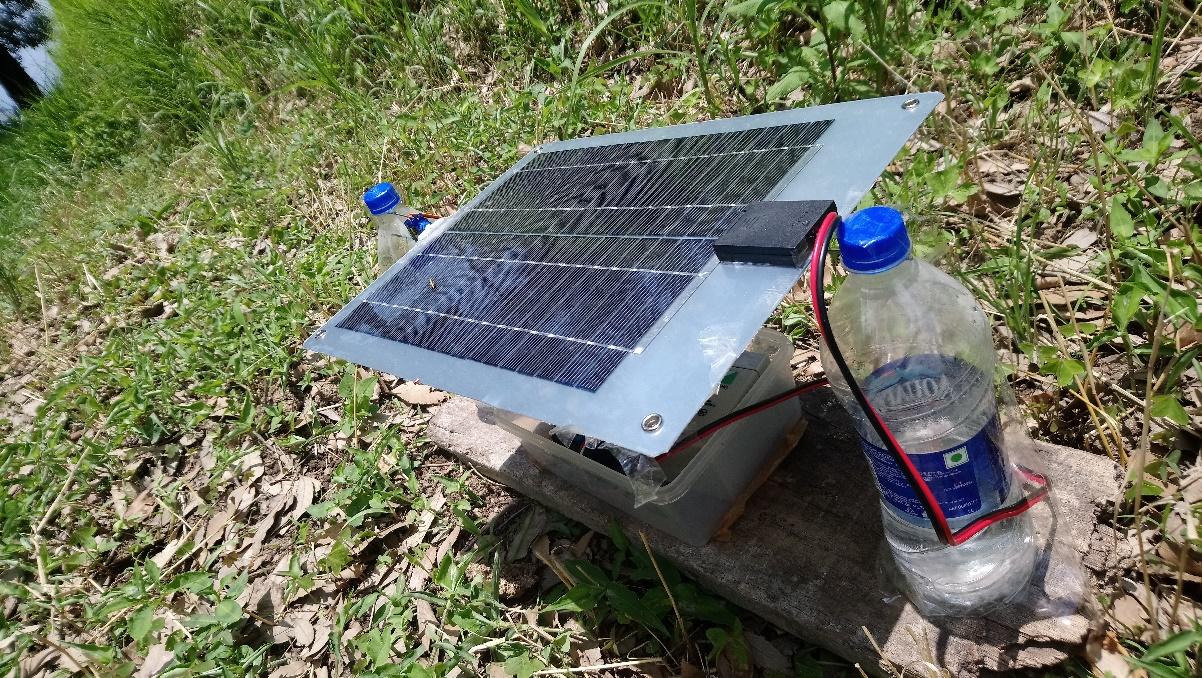
I set about designing a CPV system, using the components I had brought with me, including a solar panel, solar charge controller, battery, Arduino and lenses. Surprisingly, the majority of the solar panel components were available in HP, however I was glad that I came prepared. The first step was to configure a solar panel set up, to test my components. Once that was completed, I designed a solar tracker, which rotated the solar panel to face the sun, so that lens remained focused on the solar panel. This was the most difficult part of the project, as it required me to design a frame for the panel to rotate about. Luxuries that I was used to, such as 3d printers and laser cutting was unavailable. Hence, I was forced to be more creative, I used recycled materials to design the frame including plastic bottles and scrap wood, making the design more environmentally friendly and cost effective. In the future of my project, I would aim to design a lens mounting system and make the product more robust.

The freedom of the project and the self-motivation has really helped me to enjoy my time here. I have had so much fun hanging out with the other interns, my favourite experience was going paragliding with them, in the quaint mountain village of Bir. This was a once in a life time opportunity and I am glad I took it.

Jack Parker (UK)
Project Manager, Micro-scale Concentrator Photovoltaics
Project Manager, Renewable Energy
Naddi
EduCARE India 

Wednesday, 11 October 2017

Sports EmPOWER Girls - India in India


India in India

(Volunteer - Internship experience as Project Manager, Sports Empower Girls Project in Harike)

I arrived in India on 2nd of September, nervous but excited for what the next month and a half would hold. The first stop was Naddi, where the induction took place. So high up in the mountains, the view was beautiful. Once I got there, Shirly showed me to my homestay family. Although only anticipating to stay there for three days, the other interns had to register, which in an Indian fashion took longer than expected. I was delighted to stay with this family for nearly 10 days, they were so welcoming and loving. The food was delicious, every night sitting around the home made stove on the floor and chatting to Milan, her brother and her sister. The mother of the family, although she didn’t speak a lot of English, was so delighted to have us there and joined in as much as she could. She really felt like my temporary mum for the time I was there, doing my hair and even leaping out of bed at 4 in the morning on the day I left to give me a kiss and tell me to come back soon. Finally we set off for Harike, Janus, Marc, Ankur and I. We left Naddi at 4 in the morning and a few buses and 7 hours later we arrived.

The heat was something new, from raining in Naddi to sweating every second in Harike, but I think we got used to it pretty quickly. The day after we arrived I jumped straight into the Girls Sports Club project, meeting all the girls and playing an exhausting 2 hours of football. The girls were amazing with so much energy and excitement. 


The girls and I from the last sports session


 Since then we started to incorporate other activities, although football is fun for the girls they don’t go away having learnt much. We started relays, which were amazing for team building and the girls loved it. But most importantly we started self-defence in sports club. I think this is a vital skill that all girls should be taught in order to protect them selves, especially in the world they live. We did this by demonstrating each move, then put the girls into pairs and got them one pair at a time to perform each one. When any mistake was made I would show them again and get the girls to repeat it until they got it. This week they were so into it that the girls were correcting each other and I was so happy to see this.

Every class we finish with meditation and the girls are improving so much, concentration coming much more easily to them as the weeks go on. I really hope this carries on and the girls incorporate it into their lives, because especially as they grow up, this tool could be an amazing way to help them deal with stress and frustration.


Khushbu and I demonstrating the self-defence


The girls practicing self-defence


 Self-defence demonstration using the girls, Manpreet in pink is the local resource person


Meditation at the end of sports club


During the first week Ankur, took us around the community for chai at different houses and I loved this experience. It really felt like we were moulding into the culture and community, every house we went to, we were met with friendly faces and unbelievable hospitality. I think without Ankur, the whole community engagement experience, would not have been the same. He took us straight in and because he speaks the language and has built up a relationship with the community, immediately we could connect with them. Adi’s family were some of the most welcoming people and really made me feel at home. The village leaders house also, the whole family is so smiley and warm. The two sisters I see every week, Manpreet and Sahit are his daughters, so I am there frequently. We were all invited for dinner one night and the food was delicious!


Dinner at the village leader’s house

Loveleen’s mum also is fantastic and the woman I have been trying to collaborate with for the yoga. I can now go to her house alone for a cup of tea. She is making me a Punjabi outfit for before I leave, which I am so excited about. 

Beautiful Loveleen has come out of her shell with me and it is so nice to see her confidence. The husband/father of these two is very orthodox and has been a cause of great frustration for Ankur and I because of his unwillingness to allow Loveline to participate in any activities. This is due to the belief she must learn the skills encompassing a good housewife. Ankur and I have accepted that we can only help who we can and the thought ‘pick your battles’ was our resolve. 

The next activity for the first week in Harike was Saturday’s girls club. On Wednesday I told them to come at 4 o’clock on Saturday. I really wanted to get a chance to see them more than once a week and have a go at acting. My first session I found slightly challenging; it was an idea I had really wanted to experiment with when I arrived here. Luckily I had Ankur to translate and explain the task. I gave the girl scenarios for them to play out. Firstly splitting them into two and assigning one group, a girl wanting to be a police officer to make her town safer and the challenges she faces and the other a girl wanting to be a doctor and the challenges she would face. The girl responded really well and most made a real effort to act and be serious. Let me tell you, gosh they have improved since this first session. I also adapted it slightly so that each group before they perform must tell the audience (me and the other girls) their message. From this has come really strong association with problems and how to approach them. For the most recent session I told the girls that to their play (domestic violence and violence towards women in the public sphere) they must include one of the self-defence moves I had taught them in sports class. I was so happy with the outcome because they had really taken on what we had taught them and remembered the moves correctly. 

At the end of every girls club we do some dancing and this makes me laugh so much. The girls and I even tried some Punjabi freestyling to ‘Single ladies’ by Beyonce. 

I was keen to teach the girls about meditation. Although slightly skeptical in the beginning due to their huge energy, they surprised me from the get go and really made an effort and engaged with me. After this I finished off each week’s session with 10 minutes or so meditation time. I have become so connected to the girls and see such potential in all of them.


Meditation at the end of girls club/acting class

For the Women’s health club in the first week Ankur and I spent time engaging the women and in the second week, on the Monday it began. For the first session Loveleen and her mum came, a few friends of hers and Manpreet and Poonam (the local resource people). To start off, I explained the foundations of yoga and meditation and Ankur translated. We then did Chakra chanting, pranayama and meditation, finishing off with the asanas. 

For the first week I had definitely entered expecting a little too much from their fitness, believing we would be able to complete the modified primary series of ashtanga (with a few extra modifications). But this was overly optimistic and I adapted on the spot to massively simplify the sequence, while also cutting it down to about 7 asanas over all.

I had hoped for a stronger response from this health class, because I can see how much it would truly help these women but this is where you see the effects of the culture. The women are the homemakers and because of this they very busy either cooking for their family, making tea for guests, washing, cleaning etc. This issue had made it hard to ensure attendance every week for yoga. I have not lost hope however, as I have written in my project manual, I really believe this project still has great potential.  More time is definitely needed and I am sad to not have longer, but this time could be used to explore the best time in the day and day in the week for women in the community. Once there is some consistency then this project will build momentum even if the regular group is only 6-8. Starting small is okay because then once these women start to feel the benefits, they can tell others.

Living in the center has been a great experience. It’s such a nice open plan house that has really come to feel like home. Including our pet buffalo, which was a bit of a surprise when we first arrived, but she has now come to feel the same as a normal house pet, although a lot larger and more horned.
One of my goals coming here was to learn some Indian dishes. 


 Ankur and I

Thanks to my Siamese twin, Ankur, I’ve actually managed to. We spent pretty much every day together, cooked most meals together and annoyed each other as much as possible, in the most sibling way. But really, I am so thankful to Ankur, who has taught me a lot about the community, the culture and also introduced me into my projects.

So on the 10th of October I say goodbye to EduCARE India and I can definitely say I will miss the whole experience, the girls, the intern house and everyone in it.  


India Timms (UK)
Project Manager
Sports Empower Girls
ViKAA Centre, Harike
EduCARE India
Sep-Oct 2017

Thursday, 14 September 2017

The complexity of project management in sustainable development


The complexity of project management in sustainable development 

The second month revealed the diversity and complexity of project management in the development sector. First of all, I had my first “quarterlies”, a conference/seminar that takes place four times a year in which interns from all of EduCARE India’s centres get together and discuss their achievements but also the challenges they encounter in their various, often multifaceted projects.  

Our Team from 7 countries
 
During this quarterly event we learned about COMPLEX PROJECT MANAGEMENT TECHNIQUES, and on the kinds of THINKING one adopts in his/her everyday work in development. E.g. we had to determine which thinking style we use, i.e. we had to think about thinking, such as whether we’re an analyst, follower, learner, creator, inventor or talker & leader. I judged myself to be a learner, because one gains so many soft skills as well as knowledge about the development sector while living and working in the communities on ground. Also, one almost inevitably becomes a LEARNER because development work is so multifaceted- It involves building rapport and knowledge exchange with local authorities at the governmental level, regarding my waste management project this meant meeting the district coordinator on sanitation and waste management(Please see blog for June “The challenge but also massive opportunity of inducing sustainability and environmental conservation in rural India”) as well as doing field trips to work-related settings, such as visiting the unsanitary landfill/dumpsite in Dharamshala, a nearby town of our centre in Naddi.  

The unsanitary landfill in the nearby town Dharamshala to which also most waste from Naddi goes. It is my responsibility to have no more waste reach this DUMPSITE.


Development work also involves ONLINE RESEARCH, in my case on the INDIAN CONTEXT, on GOOD PRACTICE SITES and on factors to consider when planning and implementing such a project. Furthermore, the multifaceted nature of development domains such as solid waste management does not stop with the various stakeholders involved. In order for it to be encompassing and sustainable it must involve APPLIED RESEARCH that covers all types of groups or beneficiaries, in my case in the village of Naddi this means including parties as diverse as market food stands, grocery shops, laundry services, restaurants, hairdressers, households and hotels.   

A “Chai” Tea Break after the ‘household’ survey with this local lady


A 1 ½ hour interview with one of the very few female hotel managers in the village


COMMUNITY ENGAGEMENT thus is crucial and this is where health and education kick in, a crucial desired output of many development projects, including mine. For my project community engagement, e.g. includes holding workshops on sustainable waste practices on the grounds of reduce, reuse, recycle as well as doing a community cleanup with the entire village that also involves an educational component. Furthermore, probably most importantly, it also means collecting data of the entire village on waste behaviours and views as well as on their appraisal of the current waste management in place(or lack of thereof). Hence, attaining LOCAL OWNERSHIP, will likely achieve greater satisfaction among the community and thus also achieve greater sustainability. For my project to be sustainable and to have the most comprehensive and lasting impact I need to consider and incorporate all stakeholders, e.g. through doing surveys with all stakeholders such as the ones listed above. It also implies collaborating with project managers from other development domains of the organization. In my case, this e.g. means collecting soft plastic for the participants of the Young Women’s Association which they use to make cushions and pillows. Through doing this, the women can use waste as a resource and don’t have to spend money on purchasing new cushions but instead reuse existing waste material to make something new. In other words, waste is no longer wasted but given a new purpose. 

Thus, THINKING BIG is crucial. THINKING SYSTEMS and DESIGN is important. THINKING COMPLEX is essential. The more comprehensive, the more planned, the more researched and the more encompassing a development project is, the greater its likelihood of success- It is key to SUSTAINABLE DEVELOPMENT.

Malte Rose
Asst Program Coordinator
(Volunteer-Intern)
SWASH Village
EduCARE India NGO