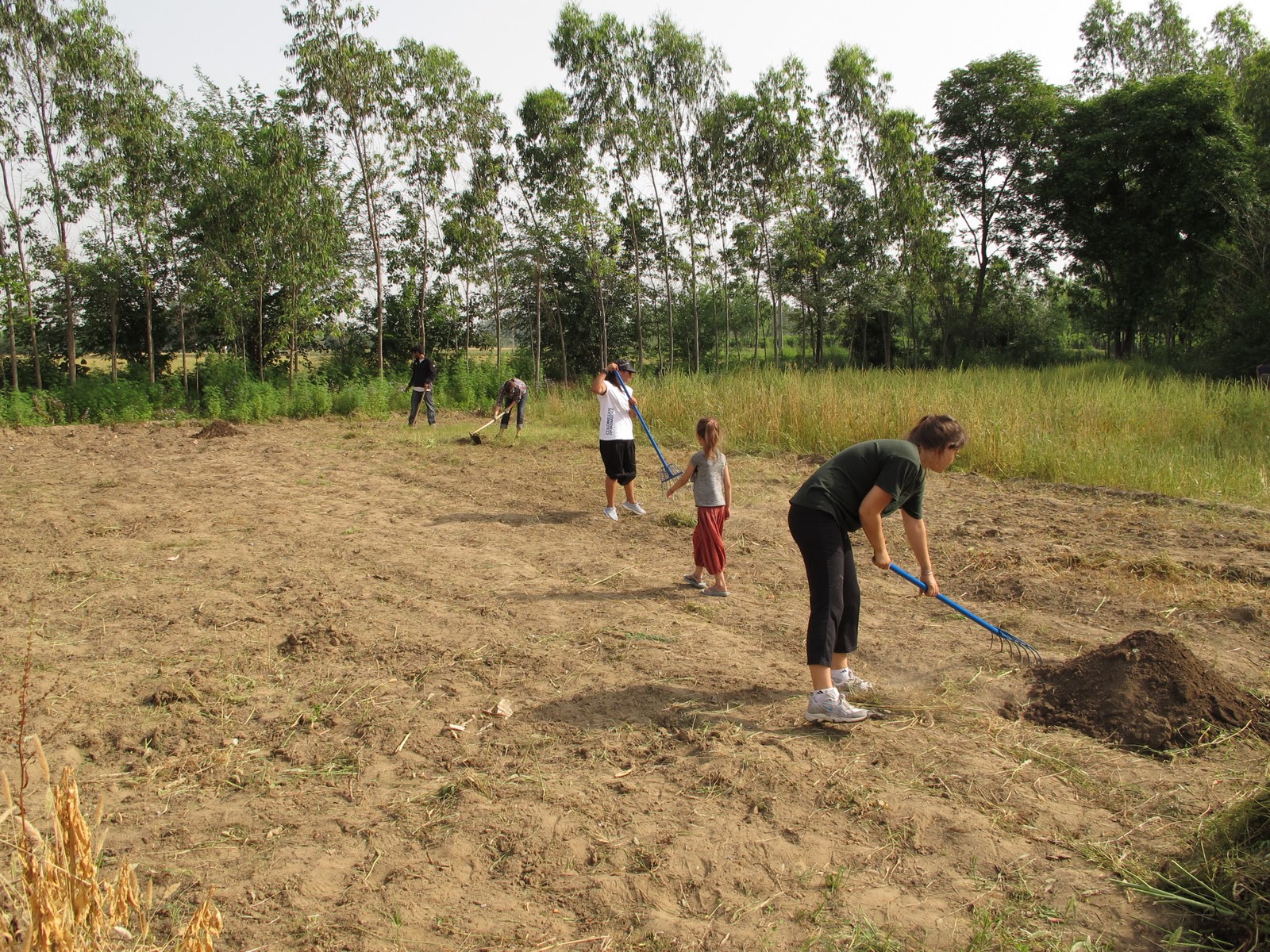
This February 2015, quarterlies took place combined in Naddi & Rait. Quarterlies is a coming together of all 4 centres of EduCARE India: Naddi, Punjab, Bikaner and Rait. During such a week project managers are able to discuss achievements and challenges with managers of the same projects from different centres. Furthermore, a week like this is filled with workshops, discussions, brainstorming, sports, good food and fun, much. fun. A combined quarterlies was possible since both the centres Naddi & Rait are situated near Dharamsala. Naddi in the Himalayas, Rait 30 kilometres towards Kangra. The week started off in Naddi with presentations of centres regarding their centres, the communities they work in, and implemented projects. It ended in Rait with a big clean-up.

Rait is a relatively new centre, and its projects are very young or even not yet existing. This quarterlies was an enormous opportunity for EduCARE India to make its presence known in the village. A good connection has already been established with the closely by situated ‘South-East’ community, yet we still are the unknown ‘outsiders’ for many people in this +/- 2000 heads counting village. For me, Bruno; manager of SWASH in Rait, this quarterlies brought the opportunity to turn this around, and to create a positive change regarding waste awareness in Rait.
In the afternoon of Sunday the 5th of March 2015, two formed groups left the Rait intern house. 30 people armed with empty bags planning to make the Indians mind dazzle. As waste is defined to be filthy and gross, people cleaning it are associated with the lowest of society, and ‘people from the West’ often is being looked up to as ‘wealthy’, western people picking waste would surely create one huge contradiction.

We split up in 2 groups: one going into the ‘South-East’ community, the second heading for the main street and shopping area. The mission was not necessarily to pick-up as much waste as possible. The core-idea of this clean-up was to smile, laugh, and namaste our way through Rait: People had to see us, people had to start gossip about us!
As I was in group number one I was walking through the South-East community. This community is the one that our intern-house is situated in, and the one which we for example celebrated Holi with, a couple of weeks ago. A similar path was chosen to the one that we walked together with the community during this event. While separating waste in ‘soft plastics’, ‘recyclables’, ‘paper & cardboard’ and ‘general waste’, we encountered a lot of people. Striking was: most of these were smiling and greeting us. However with a questioning face -what in the universe name these crazies were doing -. As far as I could understand people did not directly disapprove. They still might have disapproved anyway. They might have started the rumor: “have you seen them doing that?”: perfect
Now the question might have occurred by you: reader of this blog-post, if this is the approach that EduCARE India is striving for: 30 people walking through a village picking up waste yet there much more is to be cleaned and picked up. The answer is no. This walk was a perfect opportunity to create awareness amongst them who questioned what we are doing here. SWASH: waste management in Rait aims for creating a sustainable, community-owned household/shopkeeper level system for reduce, re-use and recycle of waste. This in close cooperation with people themselves. EduCARE India tries to create responsibility under people, hoping to one day leave a Rait which has the ability to maintain a waste disposal system itself.

Has this community clean-up been effective? Yes. Whether I extremely badly want to see this, or this is actually happening; I have the feeling more shopkeepers have put bins outside their shops. A shopkeeper showed me a sign on his bin saying: ‘waste disposal’ in English and Hindi. He mentioned he put it there after he saw us performing the clean-up. Another shopkeeper actually grabbed a bit of plastic and put it in a bag during the clean-up. Best for last: one day after this event an interviewer came to the Rait intern house asking whether he could write an article about EduCARE India and its activities in Rait.
See you in a cleaner Rait!
Rait is a relatively new centre, and its projects are very young or even not yet existing. This quarterlies was an enormous opportunity for EduCARE India to make its presence known in the village. A good connection has already been established with the closely by situated ‘South-East’ community, yet we still are the unknown ‘outsiders’ for many people in this +/- 2000 heads counting village. For me, Bruno; manager of SWASH in Rait, this quarterlies brought the opportunity to turn this around, and to create a positive change regarding waste awareness in Rait.
In the afternoon of Sunday the 5th of March 2015, two formed groups left the Rait intern house. 30 people armed with empty bags planning to make the Indians mind dazzle. As waste is defined to be filthy and gross, people cleaning it are associated with the lowest of society, and ‘people from the West’ often is being looked up to as ‘wealthy’, western people picking waste would surely create one huge contradiction.
We split up in 2 groups: one going into the ‘South-East’ community, the second heading for the main street and shopping area. The mission was not necessarily to pick-up as much waste as possible. The core-idea of this clean-up was to smile, laugh, and namaste our way through Rait: People had to see us, people had to start gossip about us!
As I was in group number one I was walking through the South-East community. This community is the one that our intern-house is situated in, and the one which we for example celebrated Holi with, a couple of weeks ago. A similar path was chosen to the one that we walked together with the community during this event. While separating waste in ‘soft plastics’, ‘recyclables’, ‘paper & cardboard’ and ‘general waste’, we encountered a lot of people. Striking was: most of these were smiling and greeting us. However with a questioning face -what in the universe name these crazies were doing -. As far as I could understand people did not directly disapprove. They still might have disapproved anyway. They might have started the rumor: “have you seen them doing that?”: perfect
Now the question might have occurred by you: reader of this blog-post, if this is the approach that EduCARE India is striving for: 30 people walking through a village picking up waste yet there much more is to be cleaned and picked up. The answer is no. This walk was a perfect opportunity to create awareness amongst them who questioned what we are doing here. SWASH: waste management in Rait aims for creating a sustainable, community-owned household/shopkeeper level system for reduce, re-use and recycle of waste. This in close cooperation with people themselves. EduCARE India tries to create responsibility under people, hoping to one day leave a Rait which has the ability to maintain a waste disposal system itself.
Has this community clean-up been effective? Yes. Whether I extremely badly want to see this, or this is actually happening; I have the feeling more shopkeepers have put bins outside their shops. A shopkeeper showed me a sign on his bin saying: ‘waste disposal’ in English and Hindi. He mentioned he put it there after he saw us performing the clean-up. Another shopkeeper actually grabbed a bit of plastic and put it in a bag during the clean-up. Best for last: one day after this event an interviewer came to the Rait intern house asking whether he could write an article about EduCARE India and its activities in Rait.
See you in a cleaner Rait!
Bruno Lauteslager - The Nethelands
SWASH Project Manager, Rait