Showing posts with label After School Program. Show all posts

Wednesday, 27 January 2016

Welcome to Harike

The first month in Harike has passed, and it has gone very fast. Many things have happened, and the team has been working hard to establish strong connections with the local communities. After the end of quarterlies, the team began strategizing on the future of the centre and planned the centre's activities for the following year. After some house decoration activities (led by our former centre manager Ethan), the real work began.

First Saturday Meeting complete
Until now, we established two weekly ASP’s with two different local communities. The wonderful  Jessica, our Women’s empowerment project manager, has initiated a Girls’ Club with the Makhu girls and has received a very positive response. Our Eco-building project manager, Maria, has been working hard at establishing relations with local women who will host the eco home stays in the future, as well as worked on the plan for eco-buildings in all of EduCARE’s centres. While our new centre manager Tommaso, in between cooking delicious meals for all the interns, has begun his business plan for Harike’s ReSTORE. In addition, we also began giving workshops to a local school on a range of subjects including SWASH, girls’ health, disaster management and environmental awareness. Maria and Jessica gave the first two workshops and received very positive feedback from both the children and the teachers. These workshops will be given twice a month for the next year and are aimed at raising awareness amongst local children about important issues.

Harike team members standing next to their caricature
With respect to the forestry project, Harike has a lot of potential particularly due to its proximity to Harike’s Wetland, a protected area which includes a bird sanctuary home to hundreds of birds migrating from places as far as Siberia. The forestry team, composed of Sydney and I, had a pretty successful month in terms of establishing contacts and planning future projects. During this month, we have managed to meet and interview a number of officers from Punjab’s Forest Department in both Harike and Firozpur, as well as visited Makhu’s tree nursery to learn about the local flora and fauna. After some brainstorming sessions and lengthy discussions with Mr B, we came up with a number of projects to implement in the future. These include:


·  Establishing a tree nursery at the local Sikh temple, planting bamboos and a number of other local trees, with the aim of engaging the local community in taking care of the trees and create, in this way, a social forestry project.

·  Work with some of the women from Makhu village to create organic vegetable gardens for self-consumption.
·         ·  Establish an income-diversification project aimed at the two local communities we work with in Harike. As these communities’ incomes rely on extraction of resources from the wetland (for example by fishing and cutting wood for fuel and fodder), our aim will be to create a number of organic vegetable gardens for the families to use for self-consumption. This will allow the families to reduce their expenditure on food, improve their levels of nutrition, as well as promote more sustainable agricultural practices.
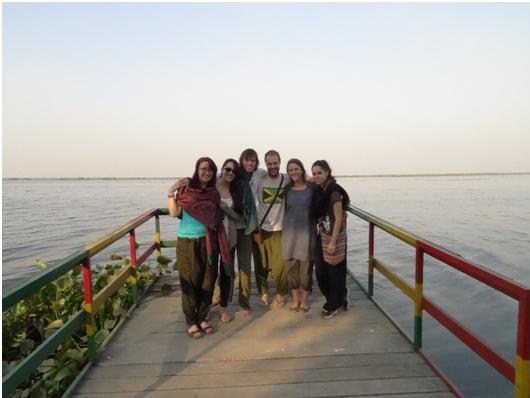
Harike team at Quarterlies
For the moment, these are the forestry project priorities and steps have been taken to ensure we’re on the right track to achieve these in the next year. In addition to the main project, Sydney and I also created a new garden for the interns’ house which will be used to grow organic vegetables, as well as mosquito-repellent plants (which are very much needed for the summer months here).

All in all, our first month here went very fast, between some planning and strategizing, drinking many, many chais, film nights, perfecting our parantha recipe, running away from frisky buffalos, playing cricket with the children and experiencing our first Punjabi wedding, we have learnt a lot but still have a lot to achieve.
Our first Punjabi wedding


Alessandra Sciarra- Italy 
Forestry and Organic Farming Project Manager, Harike (Punjab)


Monday, 16 November 2015

Settling in India

I came to India with excitement and fear: I was on one hand excited to move to India and start my internship with EduCARE, and on the other hand afraid that my internship with EduCare wouldn’t be as I had imagined. Despite of my mixed feelings, I booked my one-way ticket to Delhi. Looking back, I’m so happy that I decided to come to India. So much has happened since I left my comfortable life in Norway 2 months ago... Let me start from the beginning.

My first week with EduCare was amazing! I spent 5 days living with a family in Naddi, learning about their culture and costumes. When I wasn’t attending workshops or interacting with new interns, I usually spent my time observing my host family everyday life.

Savita and Sunita's family 
After spending 5 days in Naddi, I moved to Rait, a centre which is located 2 hours from Naddi. During my first week at the new centre, I spent my days getting to know the community. I didn’t start my After School Program project – Fun Club – before my second week at the centre. My first day with the kids in Fun Club was a lot of fun! We did different activities and games to get to know one another. One of the activities involved tossing a ball at a player while remembering his/her favourite hobby. We also did some drawing. After my first Fun Club, I felt confident and that my experience with EduCare would be good.

 
Children from Rait attending Fun Club

A girl making a drawing during Fun Club

Besides from Fun Club, I taught English once a week at our main office. Teaching English was with no doubt my favourite activity during my entire week; it was immensely rewarding to see the kids learn English, and improve their speaking. Because of the kids’ eagerness to learn English, my job felt very meaningful.

Hellen teaching English to the kids in Rait

Even though I loved my job as a project manager for ASP, I had a desire to gain more responsibility in the organisation. When the HR Coordinator position became available in late October, I had a talk with the administration team about my interest in changing job position. After several conversations and a weeklong training, I became the new HR Coordinator. Since I took upon the job position, I have been busy recruiting prospective interns to join our organisation, facilitating induction, and communicating with project coordinators. Though HR is completely different from ASP, I still get to engage with projects that EduCARE has in Himachal Pradesh. Once a week, my team and I have Girls’ Club with the girls in Matti where we show films, draw, make bracelets, and dance. Next week, we are going to celebrate the Universal Children’s Day, a day to commemorate children around the world. I’m very excited to celebrate this day since we are planning some fun activities for it. Stay tuned!

Hellen - Norway
HR Coordinator, Maiti, Himachal Pradesh

Wednesday, 14 October 2015

In the migrant camp you will always be welcomed with happy smiles


My experience at EduCARE has been a wonderful one with its own ups and downs. For some their expectations are served, for some they aren’t but for me I stood right in the middle of the bridge. This one month has been a glimpse of an independent life that lies ahead of me. I have learnt things I couldn't get my head at in a year. When I first started off, I was really skeptical. Being away from home isn’t easy for anyone after all. Even so, it whelped a sense of enthusiasm and curiosity of what lays ahead.

I started working from the very day I arrived at the centre and on the first day itself I knew it was going to be an experience worth a lifetime. I managed the migrant camp and at first I felt disconnected. It was later in time that all the kids became a family to me and I would look forward each day to see them. Wherever you go, you will find imperfections but what matters the most is that part of the day which makes you overlook them all. For me, going to the kids was that part. Whenever I arrived I was welcomed by a huge hug from Rajesh followed by Suman’s laughter and Sonyabathi’s smile. As I left, I was departed with kisses. If this isn’t worthy of all the work then I don't know what is. 

This country has vast amount of difference among cultures from state to state thus there’s adaptation required by everyone who doesn’t belong here but it's only a matter of days until the community flings their arms wide open to welcome you into their home and in their lives. It's a milestone to know that you can change someone’s life for the better. I understood my aim of being here from the very day of my arrival. Like any other person, all the people at migrant camp might seem disinterested at first due to constant changes taking place but with time, they adapt to you. Its nice to know that however your day went at the centre, you will always be welcomed with happy smiles in the mid of your day which sets the tone of your day right. 

The fellow interns at my centre made the house at Rait a home. I am taking back a handful of great friends with experiences I will never forget. EduCARE has a strangely nice way of working which I began to admire by the last week I had left here. There is no delegation so you assume responsibilities and learn the importance of self initiative. It works by such a flexible way that even when the managers and the owner itself is with you, you don’t feel challenged. My centre was like a chamber for all animals to reside in, be it a tiger or a deer, all resided in one spot. I am going to miss the thought of “I want to go to Rait” on my weekends. EduCARE is a very unique organisation and the experience is all a mix of bitter and sweet. This was the tale of my one month here and I hope I come back next time for even a longer tale.

Ashna and Puja with the children of the migrant camp in Rajol 


Ashna Nain - India
ASP Project Manager, Rait (Himachal Pradesh)

Friday, 11 September 2015

An English class in Naddi


A carpet on the floor, a black board against the wall, the gorgeous mountains behind; here it is, the scenery of our weekly English classes in Naddi.

A few minutes before the class starts, the temple often hosts a group of children playing: they know that on that day, at that time, something is going to happen. This gathering appeals more and more children as the teachers arrive. Sometimes, there are too many people, and some of them show a disruptive behaviour, regardless, the class has to begin.

During an hour, children fill in gaps of simple exercises, listen to songs and try to hear known words, answer our questions and win candies. We want them to have the bravery of leaving their native language behind, during a few minutes, twice a week. But these classes are also an opportunity for us to learn more Hindi through them, and we can feel how proud children are to teach it to us.


Harmony helping children with the English exercises
A lot of issues have to be dealt with, and running English classes is far from being easy. How to strengthen the children's commitment to the classes, how to make them feel they are improving, how to make them understand the usefulness of speaking English nowadays?

Through these classes, I had the chance to witness the incredible energy and positive attitude of the children. With their genuine happiness, curiosity and will to learn, they stand out as an example that I want to follow in my own life! I spent great moments with them, and I really hope that this project will help to broaden their horizon.


ChloƩ Morel - France
After School Program Manager, Naddi (Himachal Pradesh)


Friday, 14 August 2015

My experience in Gajner


There many things that popped into my head when having to think about my first month in India.

And having to write a blog post can be really difficult. Where do I start from? Ordering my thoughts, I would focus on my feeling regarding the arrival to Gajner and the construction of the relationship with the community, especially with the kids.

I immediately fell in love with Gajner, and I mean it.

Before arriving here, people were keeping on describing the heat of this place, which made me think that I was going to hell, instead of to a physical place. Can a place be that hot? Will I be able to survive?

WILL I DRINK ENOUGH WATER? HOW OFTEN WILL I BE SICK?

I arrived here and Gajner smelled like home. The house, the village, the dust and the heat: everything was in its own place. I felt like everything was just fine, nothing was too much, nothing was too less.

Engaging the community has been easier than what I thought and, although the process is still ongoing, hearing kids shouting your name when walking in the street, makes you forget about the heat and everything e. There is something special about these children, and it is not common sense. There is something authentic and sincere. It is a sparkle in their eyes; it is a smile or a football match. I’m not saying that everything is easy, it is tiring and frustrating especially for what concerns the language barrier; it is hard to communicate, it is hard to express yourself and can be difficult to stand the impossibility to understand what kids themselves want to tell you. This is the hardest part for me, there is a lot which is unspoken from both the parts. However, anytime you manage to communicate and see that whatever you are doing is working, you come back home already thinking about the next time you will see these kids.

Moreover, working at EduCARE means being a multi-tasking person, one day you dig a hole to collect sand, one day you work with kids, another day you attend an English class and another you spend time mapping a community. I heard many times that EduCARE is an extremely flexible environment and things can change anytime, you adapt to the environment you live in. It is true and it is challenging and fun.

I also believe that a very important aspect for the functioning of this is having a strong team to work with. Having people around makes you stronger, no laziness allowed; what you face becomes a collective action, rather than an individual one. Doing that, any action turns to be easier, because is shared.

My first three weeks in Gajner have been a full and intense human experience. It is like being in a blender and being constantly moving and shaking. It is like a tornado of people and experiences, at home and outside. It makes you feel alive. The best is yet to come and I couldn’t ask for more!

Thanks Gajner.
Soccer championship outside the house with Laure, Vijay, Johann, Mehar and Camilla

Camilla Brancolini - Italy
ASP project manager, Gajner

Thursday, 9 July 2015

Updates from Gajner Cluster

Gajner cluster opened in October 2014 and remains as of now the youngest of EduCARE. But so much has happened since and the people who have been living and working here with me and the wonderful community who has welcomed us with their open-heart are the reason why.

View of Gajner from our roof top

Until I arrived, previous interns worked on getting familiar and building relationship with the community, mapping the village and establishing basic cluster programs such as the Girls’ Club, After-School Program and Young Women’s Association.

When arriving in February in Gajner, a small village located 40 minutes away from Bikaner, we were only 3 interns: Jazzmine from Canada, Lachlan from Australia and myself.

We each took on responsibilities to develop and assist each other in projects. Jazzmine started the solid waste management system with Manoj a local shopkeeper who has become since a great resource for the interns and a role model for his community. Lachlan conducted a poverty research in the migrant camp of Gajner called Indra colony and started a Boys’ Club. As for me, I became the project manager for the Girls’ Club. Jazzmine was holding multiple responsibilities at that time: cluster coordinator, YWA and ASP project manager while I was also assisting her in those last two and helping Lachlan in implementing the poverty research.

From left to right: Lachlan, myself, Jazzmine and LƩa. Having dinner at Sushma and Pradeep house

In the month of March 2015, we welcomed LĆ©a who took over the waste management project. She bought bins to separate trash in Manoj’s shop and created displays to explain the importance of not throwing garbage in the streets. She also engaged a local trash picker from Indra colony, Mool Chand to come and collect trash from our home, from Manoj shop, and other shopkeepers in the main street. Mool Chand collects it each week and sells it in Bikaner now.

Bikaner Garbage dump, Manoj
The Multi poverty assessment tool (MPAT) survey implemented by Lachlan was a great resource for the cluster. We involved two locals to conduct the survey in the migrant camp : Pradeep Badgujar, a young man who is preparing his Master Degree in Accounting/Finance, and Anjuman Ali a female leader who runs 7 different Self-help Group (SHG )in Gajner. By involving locals in the planning and implementing of the survey, it provided us a platform for community engagement and it made them feel engaged and committed in improving the life of their community. The survey itself also provided new ideas to consider to establishing new projects and enhancing existing ones in Indra Colony.
Pradeep and Anjuman conducting the MPAT survey in Indra colony
The YWA managed by Jazzmine led to a microfinance sewing project that successfully engaged six women in Indra colony where they sewed and decorated pillowcases. The women were given money each for their work. The pillowcases are now located in our house for future sale in our ReStore. Anjuman has also recently attended one of the YWA meetings to introduce the idea of a self-help group to the women. Anjuman’s regular participation to the YWA meeting will be very beneficial to the development of an SHG in Indra colony.

Until the month of April, the ASP project was running once a week in Indra Colony. Since then, thanks to Jazzmine and LƩa who created strong bonds with a family, we have successfully expanded ASP to Chandasar (a village located 2 km away from Gajner), which takes place on Mondays afternoon, while on Wednesdays it takes place in Indra Colony in Gajner.
ASP Indra
ASP Chandasa
Girls’ Club in Ward 1 from left to right: Nandini, Bharti, Puri, Sushma, Ria and Shalu
Until May, the Girls Club was running in one location: Jessa colony. The cluster has also expanded the Girls Club to another community in Gajner called Ward One (where the intern’s house is located). As I regularly engaged a local 20 years-old girl named Sushma Badgujar (Pradeep’s sister) and her family since my arrival, she was really curious about the Girls’ Club and she decided to come with me at Jessa colony to help out in facilitating the session. She really enjoyed it and we both decided to create one in her community. Beyond the fact that Sushma is one of the potential future leaders of the VIKAS Center, she has become my little sister and our relationship has grown so much.

Same month, we started to go once a week in Modiya and Mansar, a very poor community located above the highway (9 km away from Gajner). Most kids never went to school, and those who have the chance to go attend until the age of 13-14 years old. There is no shops, no markets, and most families do not earn a regular sufficient income to feed their family properly. So, after meeting regularly a family and assessing their needs, the potential for a microfinance and ASP project is huge and really needed.

First meeting in Modiya Mansar
The cluster has also grown in numbers since! We were only 4 interns for 3 months and we are now 10 people living in the house! It is a very exciting time for us and for the community we work with as we are expanding our projects to Chandasar and Modia Mansar.

Laure arrived in May and she became the project coordinator for ASP as well as the project manager for ASP in Gajner and she will develop general knowledge classes for the kids. Camilla from Italy arrived at the end of June and she will be leading ASP hand-in-hands with Laure. Mercedes and Lucia from Spain arrived in June and will be responsible for YWA and Water Conservation respectively. Johann and Vijay are managing an alternative energy project to have drinkable water, hot water for the winter and enough to cook without using too much gas. Mariko and Arindam arrived in Gajner recently and are working on an alternative energy project to provide our house electricity.


Laure, riding a camel on the way to Manoj’s farm
Boy’s club: from left to right: Lucia, Jazzmine (on top), myself and Mercedes

Enrique and Arnaud will arrive very soon to work on Eco-building in our house and in Chandasar for the Eco-Homestay project. Harmonie, our health project coordinator will also arrive very soon to conduct health research in Gajner.

I am also working on opening very soon our first ECRC and Restore and finding a new intern house in Chandasar.

I have been very lucky so far to be working with talented, energized and dynamic people who share the same values as me and EduCARE India. As I became the cluster coordinator when Jazzmine left, I am optimistic and very happy to be staying here to see Gajner, Chandasar and Modiya Mansar growing into villages full of opportunities for these communities.


Mathilde Buchet - France
Girls’ Club Project Manager and Cluster Coordinator, Bikaner

Sunday, 14 June 2015

Sweet Dreams in Girls’ Club

As I look back to our first Girls’ Club meeting in March, career pathways other than teacher and doctor and the word “aspiration” appeared to be intangible concepts, too big for our girls group to grasp. Every week, we begin Girls’ Club with an icebreaker activity to get to know one another better. We also use these activities to assess their understanding of the abstract concepts that we try to present. Our first ever icebreaker activity involved sitting in a circle and asking each girl what they like about themselves. The range of 12 to 14 year olds struggled to understand the question, as their responses focused on the people and things they like instead. After noticing the difficulty the girls had with the activity, we tried to gauge which physical attributes they liked about themselves, thus, shifting the focus back onto them. When planning this activity, I anticipated responses, such as, “I like my creativity”, and “I like that I’m different.” This first Girls’ Club discussion, however, was met with “I like my hair”, “I like my eyes”, and “I like my cheeks.”


Since then, we have used crafts and games to encourage self-expression and to foster a sense of self and individuality among the group. Although on some Sundays, they can be quite restless, our attempts at building the girls’ confidence and showcasing women’s potential and achievements seldom fall short of meeting the objective.

Throughout May, the women’s empowerment interns experimented with introducing the girls to various female role models. We began this series with Savitribai Jyotirao Phule, who opened the first school for girls in India in 1848. The girls read the summarized biography of Phule, held onto every detail of her life, but they could not explain why she should be important to us all. They missed the fact that she is the reason they can get an education today. Evaluating this first role model discussion, we observed that not all of the girls were engaged, sidebar conversations took over, and in all, the interest was not there. Preparing to try again the following week, we thought, “maybe we should introduce someone more recent”, “maybe we should make the summary more concise”, “maybe this activity is too much like school”, “maybe we should highlight the points we want them to remember, by acknowledging one key detail each week.”

We began again with Mary Kom, a famous professional Indian boxer, who won a bronze medal in the 2012 Summer Olympics, and a gold medal in the 2014 Asian Games. Upon introducing Mary Kom, some girls were familiar with her story. Each week, we presented a new detail about her life: from being bullied as a child because she came from a poor family, to her father saying that boxing isn’t something a girl should do. The aim of this revised weekly conversation was to introduce the girls to influential Indian women, who faced challenges on heir path to making a difference. Unfortunately, emphasis on these different points didn’t generate the kind of conversation we hoped for. The girls were aware that Mary Kom was a successful boxer, but they were still missing why she was someone we could look up to. And when asked to elaborate on their thoughts of the way Mary’s father felt about girls boxing, not much was stated.


The next few weeks involved taking a break from the role model discussions. We facilitated more hands on activities: we talked about the environment, made bracelets, drew pictures, and we played games to practice our English. Our final Girls’ Club meeting for the month of May combined an abstract concept to a tangible activity. After our opening icebreaker, we asked the girls about their dreams. Two girls immediately expressed their dream of having long hair. Another girl said her dream is to be an IPS officer. After hearing this, the rest of the girls chimed in with more hopes and aspirations: doctor, teacher, and pilot were of those mentioned. In talking about our dreams, we introduced a brief cultural context on the dream catcher. We explained that according to Native American custom, when you hang a dream catcher above your bed, it catches your bad dreams in its net, and filters the good thoughts and dreams, which trickle down the feathers, onto you as you sleep. We shared pictures so that they could see what a dream catcher looked like. The girls greeted each photograph with a soft “wow!” We then pulled out some bangles and thread, and began making our own. Weaving the web was a challenge for some of the girls. As others caught the hang of it, they helped one another make their dream catchers. Because we couldn’t find feathers in any of the local shops, we embellished our dream catchers with beads instead. A photo session was soon in tow, as the girls showed off what they made.


Besides a cool ornament to hang in their rooms, I can’t really say how much was taken from the activity. But to see the progress these girls have shown from March to now is a reward in itself. The first time we ever talked about careers, their most immediate thoughts were teacher and doctor, but now, these girls are expressing dreams to fly, hopes to help others and make a difference.


Alanah Grant, USA
Women's Empowerment Project Manager - Rait

Tuesday, 9 June 2015

The First Girls Club in MJD

 Since March, the Naddi Young Women’s IDEA team have been running English Lessons for teenage girls from the MJD community. These lessons are not only educational, but provide a key platform for community engagement. After spending time getting to know some of the girls in MJD, building relationships and gaining their trust, we raised the idea of setting up a girls club.

Some of the girls had heard of the Shenni girls club and were really excited about the idea of having one (which they were clear they wanted to stay separate and just their own) as soon as possible! On the 23rd of May we held the first MJD girls club at the ECRC, which five girls attended.

We explained that the girls club in Shenni provided a safe space for the girls to discuss anything they wanted to with us, and we could talk about the things they felt were important. Then we asked what they thought girls club should be, allowing them to have some input into nature of their girls club and to make it their own. For the first session we wanted to start by discussing their dreams and aspirations. We thought that this topic would be interesting, allowing us to get to know the girls better and developing trust with them so that we can move on to covering more personal topics in the future, if they want to talk about these issues.

Their dream jobs ranged from singer to bank manager to police woman. In a society in which women’s primary duties tend to be domestic, even if they have received an education, we hoped to encourage these young women to pursue a rewarding professional life through talking about their plans for the future.

We brought along a map of the globe and everyone chose the place they would most like to visit in the world. Some were close, such as Delhi or Chandigar, while some of the girls wanted to travel far further away to Australia or Brazil. Sakshi then explained her dream of having a scooter, so she would have the freedom to go anywhere she chose to, which all of the girls agreed would be amazing.

While we carried on talking about how we would like our lives to be and listening to their favourite songs, we showed the girls how to make dream catchers. They were all really engaged in the activity, even though it is slightly complicated and some of them struggled to weave the web at the centre of the dream catcher. They all seemed to enjoy the session, so hopefully attendance will be high at the next girls club!

Lily Pollock, UK
Women's Empowerment Project Manager - Naddi

Wednesday, 20 May 2015

Coping with Chaos

This past week, the Bikaner cluster had to say a tearful goodbye to a wonderful intern who has been staying with us over the past four months, Lachlan Alexander. A spunky Australian with a wonderful personality, great beard, mind full of creative ideas and wisdom and a huge heart. While Lachlan has been here, he has been working on the MPAT survey (a survey created by IFAD) helping our cluster measure the levels of poverty in the migrant community of Gajner, Indra Colony, to help better our on-going projects taking place within the community and also to help us learn what new programs and projects could, and would, benefit the community. His research and work with the survey has led him to building strong relationships and adorable friendships with many of the families in the colony, specifically the young boys living there.

There are more than 250 children living in Indra Colony and somehow Lachlan found a way to meet almost all of them, and remember their names! This has been extremely beneficial for our after-school program, ASP, which runs in Indra Colony on Wednesday’s around five o’clock in the afternoon. During this time, all the interns in the Gajner center engage children of the migrant community to play games such as cricket, soccer or Frisbee. Our overall goal with ASP is to integrate children from all the colonies of Gajner, no matter what class, caste, religion and gender, and engage them in fun and innocent activities where they can all interact with one another. And so far, we’ve been extremely successful in doing so.

Lachlan’s last day with the cluster was May 14th and as a gift to the community, he decided to throw a huge bash and invite all the families from Indra Colony and those he’s been working with from all around Gajner. Together we would spend one last evening dancing and laughing in the vacant lot next to the intern house and enjoy a huge feast cooked by our favorite Chef, Manoj. Although, from experience, we know when we plan something it usually doesn’t go as smoothly as we hope but some how, although the day was extremely chaotic, it worked out to be the most perfect send off for Lachlan.


Here’s how it all started: Wednesday morning, we all awoke early to welcome our new intern, Laure, and Michelle from the human resources department who was coming to meet with all us interns and learn more about our projects and HR needs. While Mathilde and I attended the Young Women Association’s, YWA’s, morning English and Hindi class, Lea and Lachlan welcomed Laure and Michelle after a long night aboard a train from Pathankot (which was five hours late…as usual). Unfortunately YWA was cut short that morning due to an angry dog biting into Jazzmine’s flesh while accompanying a young one into her home. While Mathilde and Jazzmine rushed off for emergency rabies shots at the hospital, Lachlan and Michelle toured the community gathering those who were part of Lachlan’s survey project to head over to the ViKAS center, our office, for a presentation of the survey results.

Manoj began preparing the feast in the late afternoon, with the help of Mathilde and Lea, while the rest of us participated in the afternoon’s ASP activities in Indra. Now, the first part of ASP is to round up the kids (which can sometimes take an hour in itself). The colony is a giant square measured at about three kilometers in length and width. There are three separate paths we usually take to enter the community, with rows and rows of houses on each with tons of children to gather. On average there are about 3 – 4 children per home therefore making the “round up” the most challenging part of Wednesday’s ASP. We all split up gathering as many children as we could and with luck on our side,we were able to bring out a crowd of about 30. Lachlan led a cricket match with some of the boys, Michelle led a Frisbee game and Laure and I led a dance-a-thon/tickle fest with the little ones, which turned into an epic game of Simon-Says; a game where before each action you call out, you say “Simon says”. The children are to follow suit for every action unless you make a command without saying “Simon says”. If they follow the action when you haven’t said, “Simon says” they are out. Unfortunately this was a little hard to explain in broken Hindi so it just turned into the “Do Everything that Jazzmine says” game, which is exactly how we managed to get all 30 kids from Indra Colony to walk, run and dance all the way to our home at the other end of Gajner, about a 3-kilometer walk in the blistering heat.

As we approached the house, while the kids chanted “Lachy! Lachy!” (their adorable nickname for Lachlan) I started to think “man, I’m thirsty…and so are these thirty kids!” I sat the kids down outside our house and grabbed a small metal jug from inside our kitchen. Lining up the children, I poured water into their cupped hands as they raised them up to their lips and sucked the water spilling into their palms before it all dripped through the cracks of their fingers. After about five trips to the kitchen tap and back outside, I yelled over to Manoj “Manoj-ji, khana kitne budji hai?” Manoj, what time is food? “One hour,” he responded. Uh oh! Thirty kids verses four interns for another hour…what to do?!I busted out the Bollywood tunes. The girls immediately broke out into dance while Lachlan led the boys to the Panchayat field to start another cricket match. As more kids joined us, we moved into the back area of Manoj’s shop, spread out some blankets on the ground and opened a few boxes of puzzles. Michelle, Laure and I spent a whole hour saying “bahut accha!” “very good!” to every child that found two pieces that connected. It was quite hilarious.


When food was finally ready, Manoj helped bring out the dining table from our house and a few benches from inside his shop. While Lachlan, Pradeep, a friend of ours from Gajner, and I coordinated where all the children would sit, grouping them in sets of 3, 4 and 5, the rest of the interns helped bring out huge platters of chana, dal, chawal, paneer, chapatti and papadumfor each group of children. The children literally feasted while music played and laughter and giggles filled the air. The integration of the children was a huge success for us as a cluster as well, having such a large range of kids from different social and religious backgrounds come and eat, play and laugh together all due to the relationships built between them and the intern team, especially “Lachy”. We couldn’t help but smile while we ran around replenishing plates, patiently handing out sweets to thousands of hands reaching out at us and pouring water on sticky, gooey hands and little faces as they said their goodbyes and headed home to sleep off all the excitement.

After another couple of hours of hosting more families, Lachlan opening gifts from the community and saying goodbyes, we collapsed into our chairs around the dining table laughing, smiling and reminiscing about how truly chaotic but incredible the day had been. We hadn’t expected everything to work out the way we wanted too and I think we wouldn’t have been prepared to do so even if we had. But somehow, seeing the smiles on those kid’s faces, and Lachlan’s, helped us push through a very sweaty day of cooking, dancing, running and cleaning. On that day, we truly learned how to cope with chaos. We loved it and we succeeded.

“Do you work this hard everyday?” – Michelle Fujisaki


Jazzmine Lawton - Canada
Cluster Coordinator, Gajner

Thursday, 17 April 2014

Sharing Responsibility for the After-School Programme

In the past month, fun club has become increasingly interactive, providing a glimpse into how quickly it could progress into a truly holistic programme which will thrive on the enthusiastic participation of both interns and children alike.

As I prepare to leave EduCARE in the next month, I have recently been concentrating my efforts on assuring the smooth continuation of my projects after my departure. In order to do this, I have been more actively seeking out other interns to lead lessons so that they can become more comfortable with the format while I’m still here to assist and so that they are scheduled to prepare and run classes in the weeks after I leave. While some interns were definitely excited to have the chance to work with children, others were apprehensive, not knowing what to plan or how they can relate it to their projects. I sent around a project manual I had written up to address this problem of confusion or hesitation and met with quite a few people to discuss potential ideas and my experience up till now. In order to meet the children and gain a better understanding of how the programme works, several people decided to tag along to the next lesson (there are also only a handful of people here who knew where the fun-club room was, so showing them the location was a pretty vital first step!).

Expanding fun club to include other interns began last week when Emma ran a finger-painting activity. We had around another 5 interns show up as well…which outnumbered the kids 5-0. There was no one there and the town was strangely quiet for such a beautiful day, so I wandered around trying to round up some of the regulars. They were nowhere to be found, but I did find some children I didn’t recognise who decided to come along to see what we were doing. It turned out the children in Naddi are on holiday right now and many have gone to visit relatives; I believe the ones we did end up teaching were here from out of town because they spoke very little English. This shows the challenge of an unpredictable group – we were lucky it was an arts and crafts focus this week because they could all enjoy the hour without understanding much of what we were saying. Emma had brought paint, paper, some examples of finger-painted peacocks she’d made as inspiration, and – crucially – a big bucket of water for washing up afterwards! While they didn’t seem all that interested in painting the national bird of India, or any other animal, they certainly were excited about using all the colours and by the second sheets of paper colours were blending together and everything was beginning to become slightly brown…

Because we were unable to communicate well with the children this week, there was little educational about this activity, but it was a great chance to interact with some new kids, for interns to become more comfortable with the idea of fun club, and it was a really fun way for us all to spend an hour.


Lucy Di Santo, USA
After School Program Project Manager

Monday, 30 September 2013

The Journey of Rubbish…in Naddi

This weeks Shenney Fun Club activity was organised by none other than the waste management heroes themselves – the SWASH team – and as expected environmental education and awareness was on the agenda.

More specifically the activity was focused on the different ways we can dispose of our rubbish and what the environmental consequences of each are.


Hence the first activity consisted of creating a big mind map of The Journey of Rubbish as shown in the photo below.

The use of photos also proved to be an effective tool to the mind map to life for the children, though we had a hard time sticking them to the damp blackboard!

This activity was then followed by a short educational music video in Hindi – An Anthem for a Garbage Free India – that the kids loved.


And of course finally what more could we do than to empty the rubbish bins! In theory it was a brilliant plan, however in practice is proved to be much more difficult!


Because most of the older children were absent the muscle power was to come from the interns as we lugged the blue bins all the way to the other end of Naddi.

Surprisingly this proved to be a hit amongst the children, they loved the excursion, especially rolling the barrels back down the hill!


As usual the activity had its ups and downs but all in all it should be considered a success as most importantly the rubbish made it safely to the bin!

By Veronica Noetzli, October 2013

Saturday, 29 June 2013

Making Healthy Choices... and Fun!

Last week in Naddi, we took over Fun Club (the after school program) in Sheney to teach the kids about what it means to be healthy and making healthy choices. The kids were all enthusiastic as we brainstormed what it meant to be healthy, but they were even more excited when we brainstormed unhealthy things, yelling out their favorite foods - ice cream, lollipops, chocolate! Eventually, we had the kids thinking beyond food and we began to talk about how happiness, work, and friends have to do with being healthy. Next we talked about "choices" and what it means to choose something. With folded paper and color pencils, we drew healthy choices on one side and unhealthy choices on the other - careful to avoid things that we did not have control over, such as the air we breathe or diseases we're born with.

Once the kids were thoroughly antsy, sick of sitting on the ground of the Fun Club room, we herded them outside to play a game about healthy choices. The kids lined up on one side of Sheney, divided into two teams, and we put the brainstorming poster on the other side with a line down the middle, dividing it into a healthy and unhealthy side. I stood in the middle with a stack of homemade cards - healthy or unhealthy choices on each (with an image, an English label, and a Hindi label). The kids had to hop on one foot to me, get a card, hop on the other foot to the poster, and stick the card in the correct column before hopping back to their team and tagging the next person. The relay race began with cheers and yells from both sides. (The kids can always be counted on to get a little competitive!) And as they hopped across the community, women came out of their homes to watch, smiling and laughing as the kids haphazardly jumped from one end to the other. At the end of the race - amid cheering, laughing, and overall confusion about which team actually won - we gathered around the poster to go over the cards. All the kids yelled whether each choice was healthy or unhealthy - vegetables, ice cream, sleep, water, visiting the doctor, visiting the dentist, fighting, going to school, cigarettes, soda, alcohol, many more - and we moved any out-of-place cards into the right column.

As the sun began to set and Fun Club came to a close, I pulled all the kids together outside and we pledged to make at least three healthy choices every day. "What should our healthy choices be today?" I asked. In the middle of the community, we did ten jumping jacks together, shouting the number of each one, choosing exercise for our first choice. Then I handed out lichis, and we stood together, peeling away the rough skin and sucking on the juicy fruit, choosing fruit as a healthy snack for our second choice. "What will be your third?" I asked, and everyone shared what they would do - push-ups, sleep, be nice to their friends, eat dal...

This simple activity may seem unimpressive to an outsider, but it was the first health activity with the kids and we all considered it a great success. Now they are beginning to think about health, what it means to be healthy, and how all the choices they make day-to-day affect their well being. Children are the future of course, and as this generation grows up, we want to ensure that the community will continue to thrive and develop even healthier lifestyles.


Betsy Hinchey
United States of America
Rural HealthCARE Project Manager
March – July 2013

Tuesday, 30 April 2013

Marginalised Community Empowerment through youth engagement and education

The MCE projects in Punjab have grown exponentially these past few months! We have now expanded and are working with another migrant camp in Hariana. Many of the people from this camp are closely related to the members of the Paro camp. Moreover, two years ago, we used work with the Hariana camp. So during our first interactions with them, their reactions towards us were totally surprising. We had a very happy welcoming and they showed themselves to be extremely open towards working with us again.
DSC01578
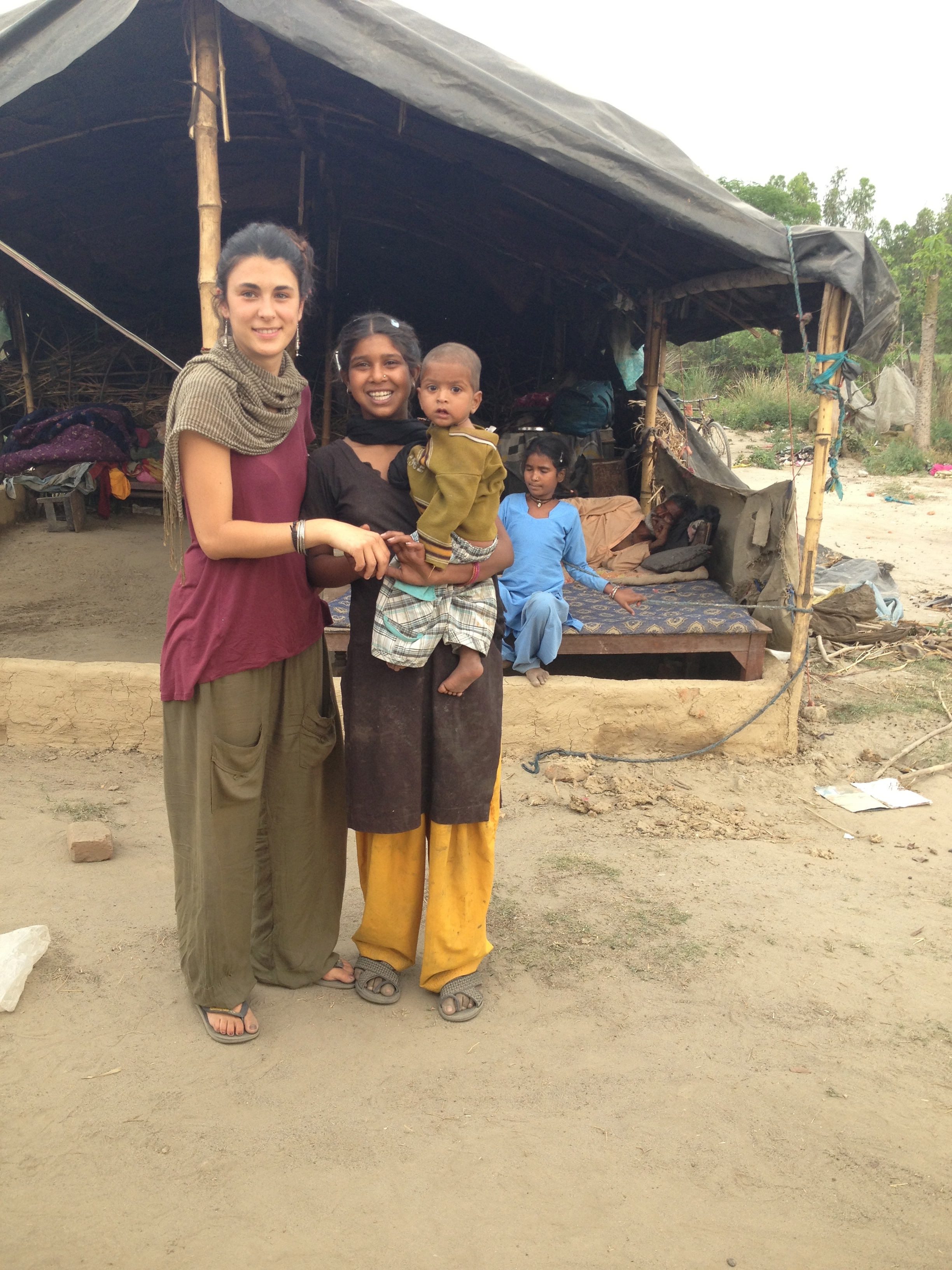
Elise with two of the young girls from the Paro migrant camp
IMG_3581
MCE Project Manager, Iria  
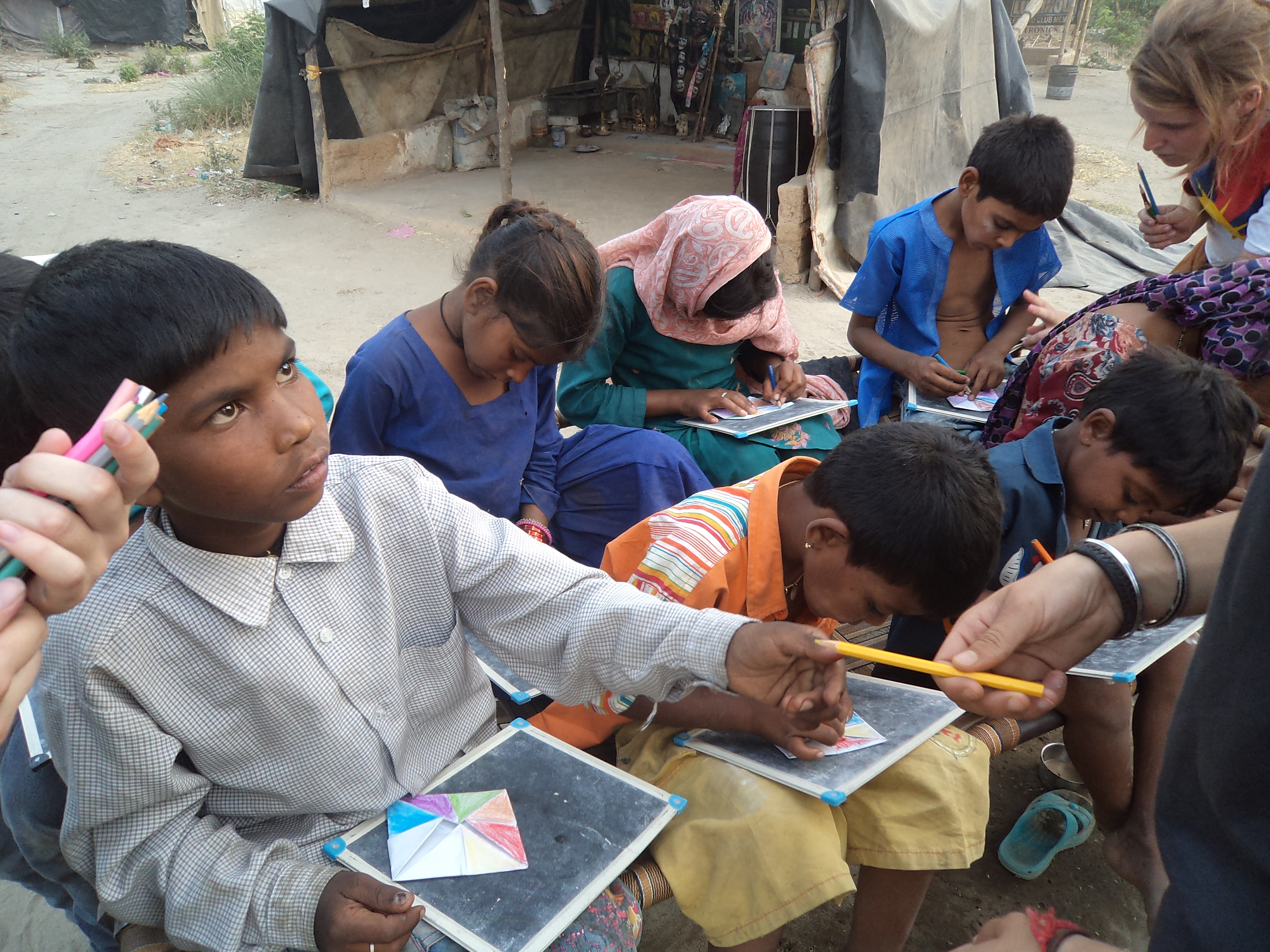
The English and math classes that we have been conducting with the young women of the Paro community since last fall have continuously been improving. We have created worksheets and introduced English reading skills as a part of our lesson plans. We originally thought it would be a great challenge for us to teach reading to the young women,  as they do not know how to read in Punjabi – their own language, but as always, the women have surprised us! They were happy to learn and they really put in a significant amount of effort into it. Now, after a month and a half, they recognize almost all of the sounds of the letters, they are able to read simple words, and are even able to write some of them.
IMG_3436
DSC01563
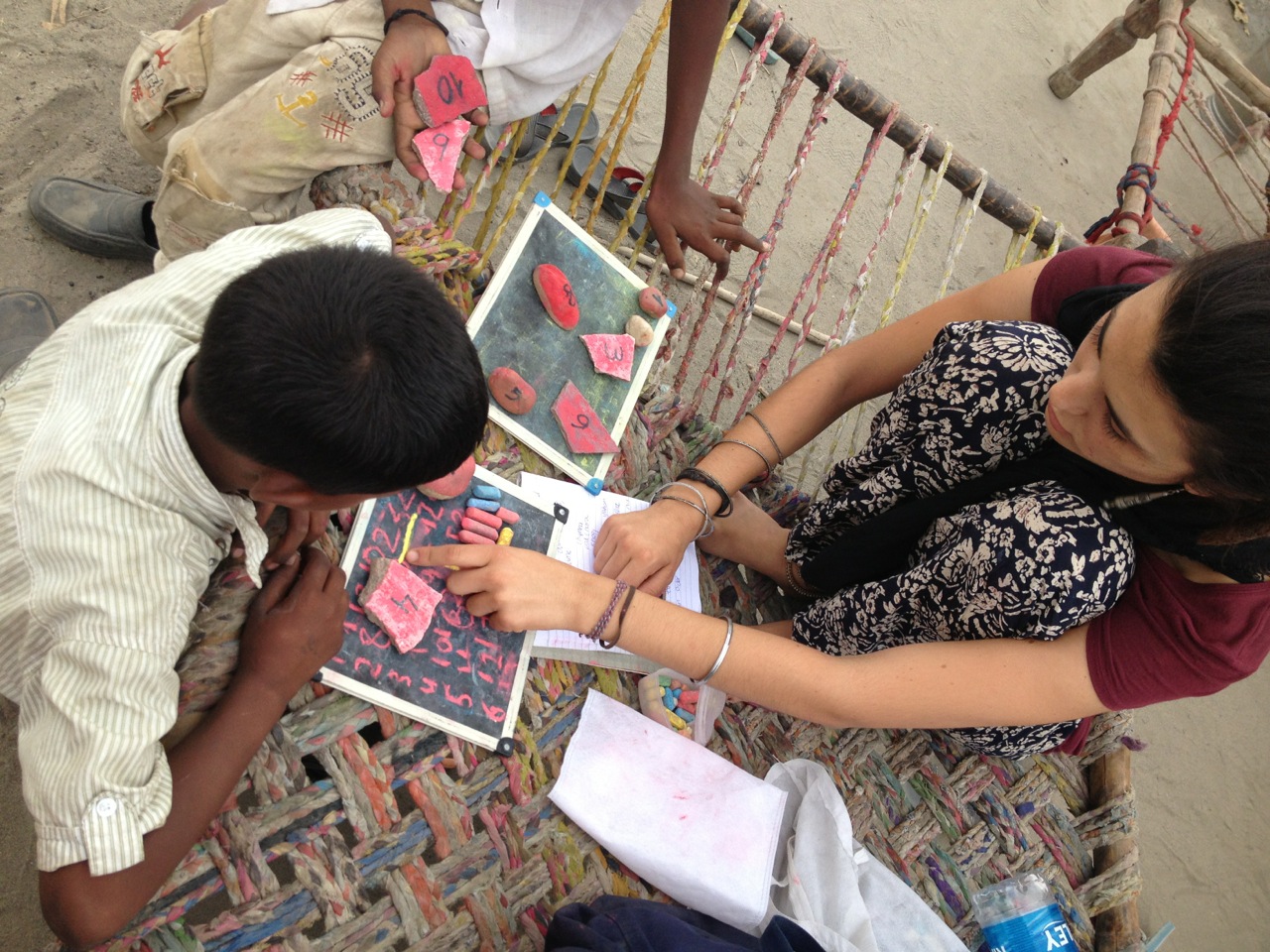
With math, we were also very pleasantly surprised. Addition was actually quite basic for them and with subtraction – they were able to understand it only after one lesson! So now we are just introducing more and more complex numbers, and they are starting to connect all of their knowledge. Moreover, something that is making us incredibly happy is seeing them help each other and teach each other at the camp. While we are not there, the older girls are teaching the numbers and the alphabet to younger children who don’t go to school
IMG_4334
Math lessons
Math lessons
Unfortunately, the health and hygiene situation is still a big problem at the camp. We are still continuing our efforts to improve the living standards. We have had a couple of situations with two malnourished young women that especially brought these issues to the forefront. They were both feeling very weak; one even fainted and was on an IV. So we did a small informal survey with them and found out that, at least one of them was only eating once a day, and it was a very small amount of food. Moreover, both of them are currently breastfeeding and thus it is even more crucial for them to eat properly. In this context, we decided to create a nutritional workshop to do with them. It was a totally successful project! Even without a translator and the language barriers, we were able to conduct these workshops and have the women understand what we were trying to impart to them. We did the workshops in two days, in two different sessions; in the morning with the young women and in the afternoon with the mothers. The latter was highly motivated and eager to implement these healthier nutritional models. These workshops also enabled us to converse about these topics more freely and for it to become a central theme in our work. Now the migrants are showing us what they cook, giving us a taste, and we are able to directly assess how they are eating. Just from these immediate results, we say that it was a great success. We are so proud of them and of ourselves.
DSC01603
Last, but not least, the micro-finance initiative has begun! We have recently just over a month ago created a Self Help Group for the women in both the Hariana and Paro camps! In this project the women are supposed to contribute either 2 rupees a day, 15 rupees a week, or roughly 50-60 rupees a month. Moreover, in Paro, the men were also very keen on this microfinance project, and so we also established a SHG for them as well. We are hoping through these micro-savings we can teach the migrants more effective ways of financial management and savings. Since usually, it is not for the lack of money, but rather their usage of money that is the biggest problem contributing to their poverty. Furthermore, through these SHGs we would like to enable the women to feel more economically empowered and less dependent on their families and husbands. Soon after these developments, we eventually began discussions of forming more personalized micro-finance projects with them in the near future, such as creating a chicken coop to produce and sell eggs.
DSC01568
Natalie with some of the members of the SHG
DSC01610
MCE Project Manager,
Iria Paz
Iria Paz, Spain
Project Manager – Marginalized Community EmpowermentJanauri, Punjab; Mar-June 2013