Showing posts with label EduCARE India Internship Program. Show all posts

Wednesday, 30 March 2022

Creating a Task-force of Youth Volunteers for Disaster Risk Reduction and Emergency Response Preparedness

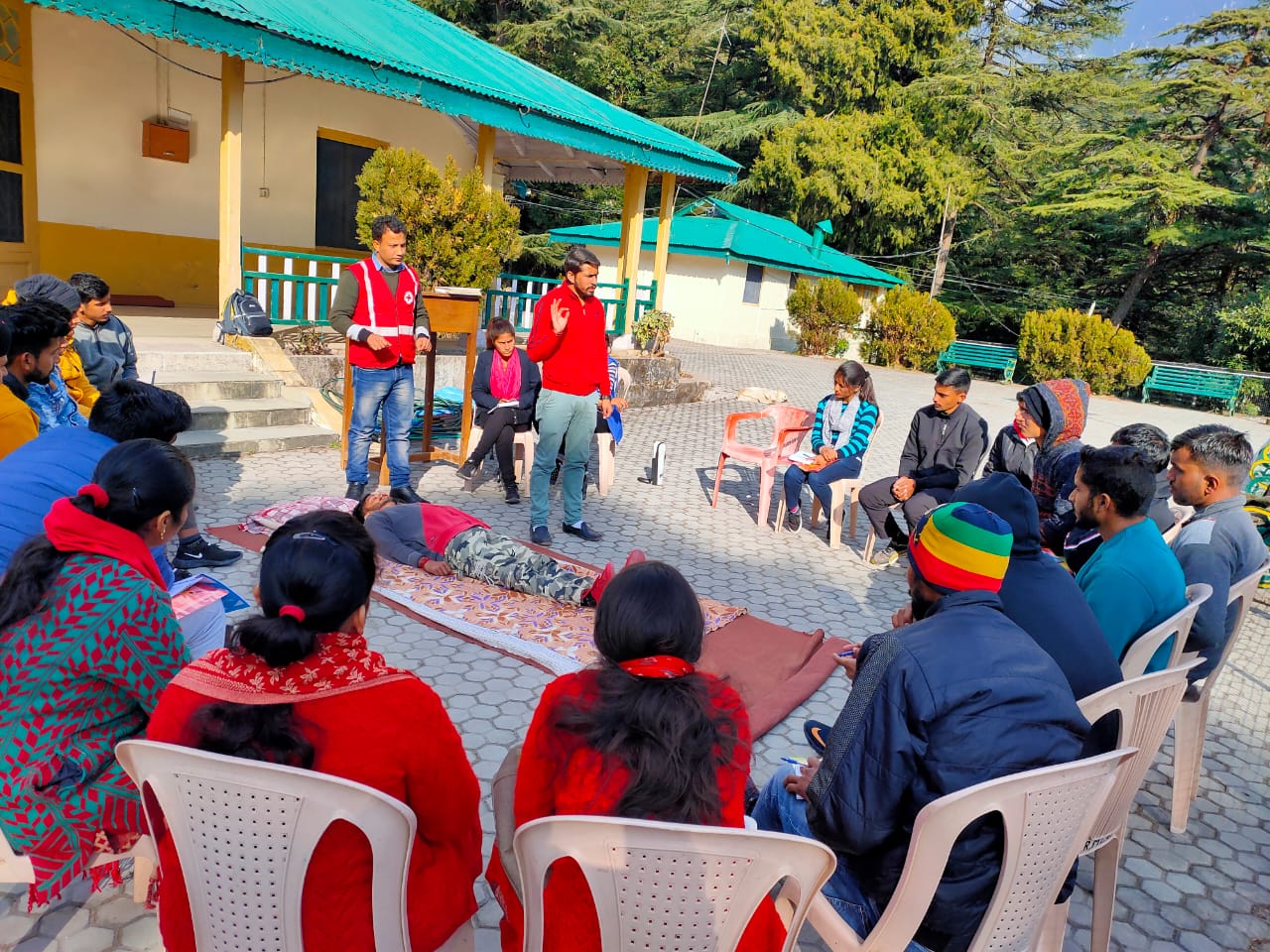
EduCARE India chose to scale down most of its projects to focus on covid-19 response in early 2020. The NGO continued to invest heavily on mobilising youth volunteers for Creating a Task-force of Youth Volunteers for Disaster Risk Reduction and Emergency Response Preparedness. 


Through early 2020 to early 2022, a total of about 5000 volunteers were trained in various skill-sets (Basic Fundamentals of Disaster Management, Volunteering, Emergency First Aid, Search and Rescue, Basic Fire Fighting) at our  Centre for Environment, Health and Safety at Kangra in association with Disaster Management Authority and the Red Cross Society. 


Some of these volunteers then went for a 2-week Advanced Search and Rescue course to Regional Mountaineering Centre, while a few select others were then sent for  advanced training to NDRF (National Disaster Response Force for their ToT (Training of Trainers) on CSSR (Collapsed Structure Search and Rescue).


Sunday, 23 July 2017

Experience of adapting in rural India, and developing a new project of my choice - Cora


The post-adaptation phase at ViKAAS Centre, Harike


The intensity things are lived with here in Harike speed up the adaptation process, making one feel an integrated part of the community in no time. There are still of course some aspects of life here that are almost impossible to adapt to, but that, one can learn to endure with a touch of patience. Take for example the thousand mosquito bites at night (which are then replaced by intruding flies during the day) - you will never adapt to these little guys, but you will gradually pay less and less attention to them. 

Once the adaptation phase comes to an end, the real Vikaas (meaning development in Hindi) work begins. The novelty of being one of the only foreigners in a rural village wears out pretty quickly and locals slowly start treating you like one of them – this means losing the luxury of being treated like some prestigious princess from a faraway land, but it also means gaining people’s trust and respect; vital if you are attempting to reshape long-standing dynamics and mentalities.


When I first arrived in Harike, I knew I would be designing and implementing a project in what they refer to as Women Empowerment. However, I was unsure as to how I, a women from Europe with its culture of equality and opportunity, could ever be able to empower women who knew the hardships of life more than I could possibly imagine and who had become thick-skinned to battle through the daily oppressions they faced. I had a vague idea of the various ways women were increasingly being empowered around the world (micro-finance projects, language and IT skills, practical skills development etc.) but I needed to find something that not only the women in the community would benefit from, but that I would also feel capable of carrying out. The first thing I had to decide was whether I would be working with adult women or concentrating more on girls and teenagers. Considering my stay in Harike was only three months I decided that whatever project I did would have a longer lasting effect on the younger generation. 

I wanted to design a project that encompassed as many aspects of EduCARE’s holistic SHEEE* approach as possible. I was adamant to start an innovative project that would eventually be community-led, run by the very same participants. The moment I became aware of the lack of opportunities for girls to practice team sports outside of school, I didn’t have to think any further - I was going to start the first Girls Sports Club in Harike! Sports is the perfect vehicle towards empowerment since it fosters confidence, self-worth, team-work and endless skills to improve the quality of life of a woman.

*SHEEE (Social, Health, Economy, Education and Environment)  

All the motivation, the dreams and aspirations were there and of course a bag filled with optimism (either genuine or forced). However, the less romantic side of me also knew that I had to be realistic and that it was very probable that my project would flop or not even take off.  To avoid disappointment in this unpredictable field of development, I told myself that as long as I tried my best I would be happy with the project results, regardless of whether they were a success or not.   I had already had two very positive GSC (Girls Sports Club) sessions at the local government school, but the success of the project was going to be judged the following week when the sessions were to be moved from government school to our Vikaas centre. The girls were not going to be forced to attend the sessions by teachers anymore and it was going to be entirely up to them whether they wanted to show up or not.  Aware of the difficulty in gathering a specific group of people, in a specific place at a specific time I spent the whole preceding week reminding the girls where and when to attend the session, never forgetting to transmit enthusiasm and motivation.

 The day of that initial session at our ViKAAS centre arrived and I was bouncing with excitement and utter dread - what if no one showed up? What if my selling skills were so terrible that I hadn’t even managed to convince a group of girls to attend a weekly sports session?  After spending two hours setting up the room and the workshop (we were going to discuss the importance of breathing correctly) I went outside the office and began pacing up and down, hoping that the afternoon would run smoothly.  I checked my phone and felt a wave of sadness when I saw that it was 16:10 and no one had shown up. “It’s fine if no one shows up” I told myself “it’s all part of the experience” but deep down I was gutted. As soon as I gloomily turned around to go back into the office I heard my name being shouted from behind. I turned around and about 10 overly excited girls started running in my direction. I am not exaggerating when I say that my heart was filled with extreme happiness when I saw that they were all wearing sports gear and all had a bottle of water in their hand (just as I had told them). I began the session with some breathing exercises and stretching and still, girls continued to show up. Twenty minutes into the session and I was in charge of a class of 20 girls, my project was working after all. The session was extremely successful, so much so that the number of girls was increased to 35 the following week. This made me realise that once you’ve gained community interest and collaboration, the hard part of a project is done.
Cora Craigmile 
Project Manager,
Girls Sports Club
Women Empowerment
Harike, India
Aug 2017

Tuesday, 8 September 2015

Coming full circle


Sitting on the rooftop of the Gajner intern house, I hear religious melodies travel across the desert’s horizon by speaker. The horn of a passing train blows in the distance, as below, the engine of a tuk tuk shakes in anticipation of its next customer. Looking up, the moon illuminates a slowly dimming sky. Looking around, I see hues of green, blue, and brown— Gajner is decorated with buildings of brick and cement, sandy roads and footpaths, isolated trees, and a small lake—it’s beautiful! The aroma of garam masala and other spices blow along in the wind, as the evening’s cool breeze offsets the Rajasthani heat. Closing my eyes, I take everything in: my surroundings, my thoughts, the nostalgia, and this peculiar blend of every emotion possible. I’m happy, sad, anxious, reminiscent, confused, and thankful. Sitting on the rooftop of the Gajner intern house, I’m reminded of the February quarterlies—where it all began.

I can recall the conversations of sustainable development, an all-day workshop on project management, and the many, many tea breaks that took place right here. I had been in India two weeks prior and was already feeling overwhelmed about my project; fortunately, this week of workshops, discussions, and challenges put a lot into perspective for me. I remember feeling ready to get back to my village and being eager to start working. I knew the anticipation, just as vividly as my recollections of disillusionment. Coming to India, I thought I would be working with an already-existing Young Women’s Association, tackling issues such as gender inequality and helping village women enhance their skills, so that one day, they could become the community’s leaders. Unfortunately, things didn’t quite work out that way. In fact, we still don’t have a Young Women’s Association in Rait.

Of the many lessons I’ve learned, the planning and the failures are as much a part of the process as the successes. Our initial strategy for establishing a YWA in Rait didn’t happen the way we hoped. The community wasn’t ready for a formal institution like such, so we used other ways to engage and empower local women: the health camp, informal English lessons, our research proposal, various microenterprise activities, and a multitude of broken-Hindi-limited-English conversations coupled with smiles and sweet cups of chai. Serving as centre manager, I’ve seen the Rait Centre progress from none to facilitating six operational projects within the community. Looking back, I’m so thrilled to have been part of this team. The motivation we took from February’s rooftop sessions in Gajner helped us initiate, expand, and continue our work throughout the village.

Interns in the Rait Center


To ensure a holistic approach to rural sustainable development, the Rait Centre uses a unique strategy for teamwork. We each devote at least an hour each day to working on one another’s projects, offering each other support, and finding ways to integrate our projects with others. This strategy caused me to become enthused about waste management, and it also improved my gardening skills! Some of my most meaningful work came from running other projects, such as the After School Program in the migrant camp. The way the children’s faces beam with huge smiles each time we arrive—excited to learn and play games with us—these are memories I won’t forget. Likewise, the relationships I have built with various community members are interactions I will hold onto for a long, long time. A lot of what I have encountered here in India has changed me, but I find myself in awe of who this experience has shaped me into. Every namaste, smile, peculiar stare, and curious feel of my afro, are all moments I will take with me as I leave India.

Girls in the migrant camp playing with Alanah's hair

Reflecting on my seven months here, I’ve seen many sides to this beautiful country. I’ve seen India’s wealthy and urban, just as I’ve seen her rural, and her poor. I’ve seen her pride and glory; her relentless, hard work; her pain, and I’ve seen her struggle. I’ve seen her masses, and I became familiar with her marginalized and ostracized. I’ve witnessed a number of India’s beautiful landscapes, took part in her customs and traditions, learned her history and invested time into her future. I was fortunate to experience her warm embrace, just as I, too, have encountered her hostile hesitation towards the unknown. Countless times, I have been hassled, harassed, and hustled, and I learned to haggle my way around. It’s only been seven months, but it’s all so fascinating! India has this way of forcing you out of your comfort zone, breaking down the barriers you’ve psychologically built up around yourself, and making you begin again. 

Alanah playing with children in the migrant camp in Rait


On this rooftop, six and a half months ago, I sat back, receptively listening and taking note of all of the other interns’ contributions to each discussion. Returning to Gajner, as my internship comes to an end; I now observe and impart knowledge regarding the women’s empowerment projects on ground. A few months ago, that quiet, confused intern became project coordinator. Sitting here, on the rooftop of the Gajner intern house, I am reminded of where I began—completely overwhelmed and unsure of my place within the community and the organization. I found it! I often say that I have taken a lot more from my time with EduCARE India compared to what I have given. Nonetheless, I am grateful. I am thrilled. I am humbled. As nostalgia sets in, thoughts take my mind everywhere: I wonder what my girls in Girls Club will grow up to become; whether they’ll pursue higher education as well as the aspirations they have expressed at the tender age of twelve. I’m curious about the migrant children and what the future holds for them; will they go to school; will they have more economic opportunities; will they be able to settle in one place, and be part of the community. The main road is quiet and the stars now sparkle from a distance. I can hear the laughter of the Gajner team below, as all around me is quiet. Looking at the empty rooftop, I remember the faces from that February gathering. I remember how and what I felt. A lot has changed since then.

Alanah in the migrant camp in Rait


Alanah Grant - US
Women's Empowerment Manager and Rait Center Manager, Rait (Himachal Pradesh)

Thursday, 17 April 2014

Sharing Responsibility for the After-School Programme

In the past month, fun club has become increasingly interactive, providing a glimpse into how quickly it could progress into a truly holistic programme which will thrive on the enthusiastic participation of both interns and children alike.

As I prepare to leave EduCARE in the next month, I have recently been concentrating my efforts on assuring the smooth continuation of my projects after my departure. In order to do this, I have been more actively seeking out other interns to lead lessons so that they can become more comfortable with the format while I’m still here to assist and so that they are scheduled to prepare and run classes in the weeks after I leave. While some interns were definitely excited to have the chance to work with children, others were apprehensive, not knowing what to plan or how they can relate it to their projects. I sent around a project manual I had written up to address this problem of confusion or hesitation and met with quite a few people to discuss potential ideas and my experience up till now. In order to meet the children and gain a better understanding of how the programme works, several people decided to tag along to the next lesson (there are also only a handful of people here who knew where the fun-club room was, so showing them the location was a pretty vital first step!).

Expanding fun club to include other interns began last week when Emma ran a finger-painting activity. We had around another 5 interns show up as well…which outnumbered the kids 5-0. There was no one there and the town was strangely quiet for such a beautiful day, so I wandered around trying to round up some of the regulars. They were nowhere to be found, but I did find some children I didn’t recognise who decided to come along to see what we were doing. It turned out the children in Naddi are on holiday right now and many have gone to visit relatives; I believe the ones we did end up teaching were here from out of town because they spoke very little English. This shows the challenge of an unpredictable group – we were lucky it was an arts and crafts focus this week because they could all enjoy the hour without understanding much of what we were saying. Emma had brought paint, paper, some examples of finger-painted peacocks she’d made as inspiration, and – crucially – a big bucket of water for washing up afterwards! While they didn’t seem all that interested in painting the national bird of India, or any other animal, they certainly were excited about using all the colours and by the second sheets of paper colours were blending together and everything was beginning to become slightly brown…

Because we were unable to communicate well with the children this week, there was little educational about this activity, but it was a great chance to interact with some new kids, for interns to become more comfortable with the idea of fun club, and it was a really fun way for us all to spend an hour.


Lucy Di Santo, USA
After School Program Project Manager