Showing posts with label Marginalized Community Empowerment. Show all posts

Monday, 9 November 2015

A Garden for the hungry tummies

I did not have a definite idea as to what I was going to be working on initially when I started my internship at EduCARE. My longtime wish to work on rural development projects like waste management, alternative energy or forestry in my country has brought me here but still not knowing where and what to begin with. To work with the migrants, the needy, the poor or kabadiwalas (trash pickers) as labeled by the society, was the apt platform for me to put in my thoughts and efforts to work on something that would help this migrant community in their everyday lives.
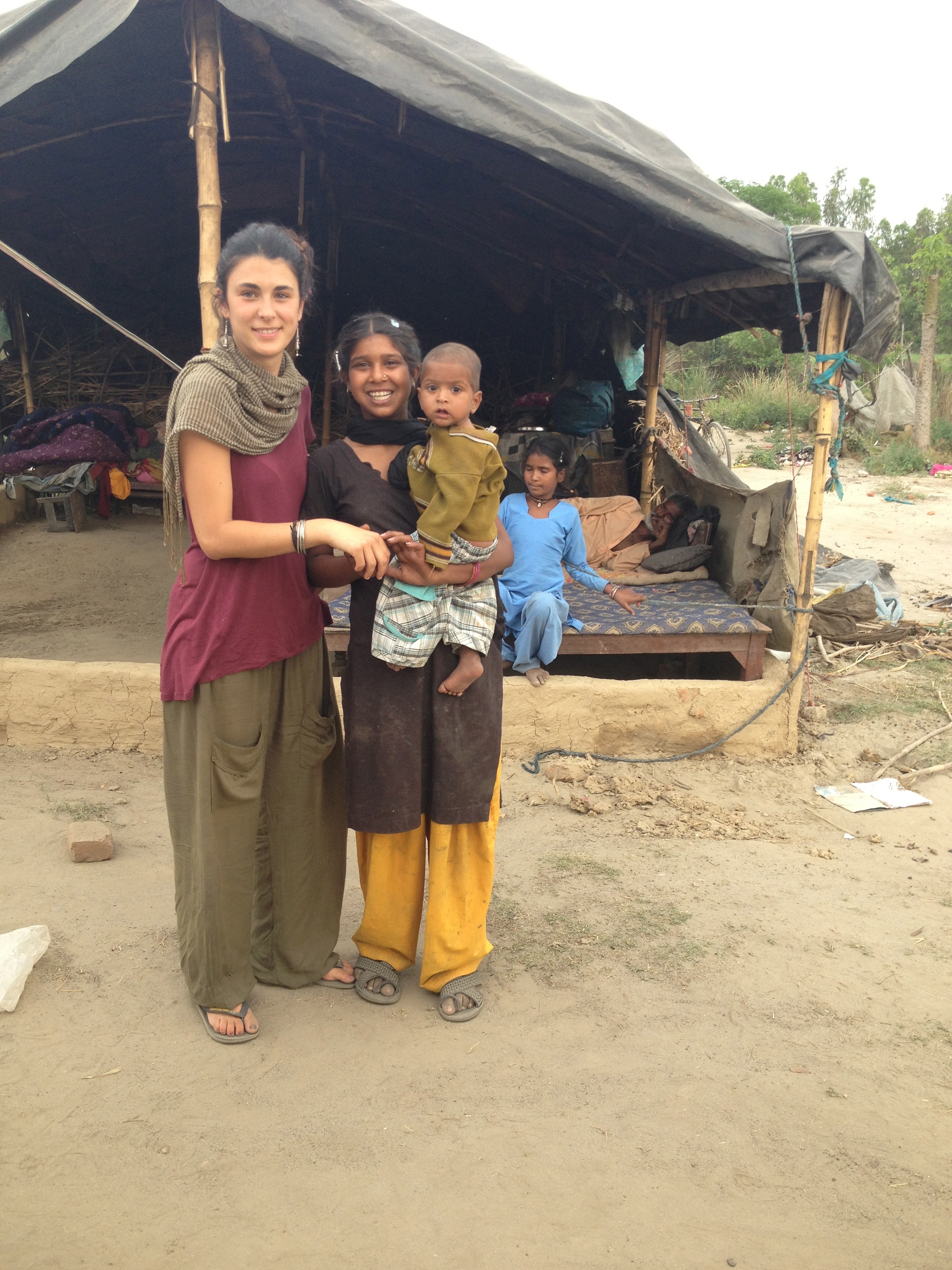
The migrant community of Paro
Since the day I started visiting the migrant camp here in Paro, Punjab, it was quite conspicuous that the community struggles to meet their daily needs. Some days they would not even have enough money to buy their aata or cheeni for their roti and chai for the day because Nanku, the head of the family could not accumulate enough trash to sell or the trash buyer did not show up for the day, or even if he did he was shameless enough to cheat these vulnerable people in their basic mathematics right in front of my eyes. Who is to be blamed? Is it their ignorance, illiteracy and poverty or is it that some people are too heartless to swindle these poor people off their daily bread. Hence, I decided to settle down with a project that would at least be of use in their food supplies: a community garden.
Preparing the plot for the garden
Initially we were planning on making the garden organic but it seemed to be a strenuous task as it would be a lot more time and money consuming to buy the organic seeds which were not available locally, to build a nursery, to shelter it, to get the organic fertilizers and pesticides and also the maintenance. However, after discussions with the community about all the important factors such as their necessity, plot for cultivating, ploughing, fencing, watering, sustainability, etc., we decided to go ahead with the locally available hybrid vegetable seeds. I had no prior experience in gardening so I had to do some basic research online. Also, by discussing with a few people about the soil here and the seasonal crops that can be cultivated during this time of the year, we finalized on eight vegetable seeds which included coriander, spinach, cabbage, peas, cauliflower, carrot, radish and turnip. Thus, with very little knowledge and hoping for the best outcome for the community, we commenced work by marking a plot at the camp with the help of Nanku and Gulshan. Since the community was very excited about it, things started moving pretty fast in the beginning. I would not say that we had to put in excessive effort and time in making this garden, but without Nanku’s involvement from ploughing the soil till sowing the seeds, it would have been arduous. Perhaps the hardest part was to motivate Nanku every day to get work done as he would be tired after his day job or he would be busy with some meeting at the camp.
The main structure of the fence for the garden 
We started by cleaning the plot and as we began the initial ploughing, we had to collect manure (animal waste and compost) to mix it with the soil and then we had to let it set in the following couple of days while we started working on the fence, which was the most labor and time consuming part in this whole project. Aurelien and I had to collect plenty of bamboos from the nearby jungle and carry them on our shoulders back to the camp. Some days it had to be early mornings and some days it had to be late evenings. The bamboos were put together and the fence was made by pushing them deep in to the ground to make it sturdy and also make it dense enough so that the dogs and chickens cannot penetrate. Even at this point, I was skeptical about the outcome of this project; not knowing if we were doing things the right way or how beneficial this whole thing would turn out to be for the community. Nevertheless, we were highly motivated to persevere by the little kids at the camp, who repeatedly questioned us every day when were we going to sow the seeds.  

The bamboos are ready to be placed! 
One of the kids of the camp observing the process
The garden fence, made of bamboo, was quickly finished

After the completion of the fence it was all ready, the soil looked fertile, the fence looked sturdy and the seeds were waiting to be sown. Thus, with a couple of days of re-ploughing to loosen and level the soil and dividing the plot into many sections for different seeds we were all set for sowing. The seeds were scattered considering the three important factors of gardening, the depth of sowing the seeds, spacing between the seeds and watering, all the seeds were sown in the following couple of days. I visited the garden everyday to water the soil and peep over the fence to check if a leaf was showing up from the ground and one evening within the next three or four days there it was, a few cotyledons popping out from the soil. The excitement and happiness running inside me was immense to see something grow from the seeds that were planted with my own hands. 

The first cotyledons in the garden!

I cannot forget to mention that this whole process wouldn’t have been possible to be completed in such a short span of time with no cost involved, without the contribution of all the other interns (Aurelien, Amelie, Madeline and Breanne) who were involved from day one. Now all I can wish for is a fruitful garden to fill the hungry tummies in the community.


Rizwan Ahmed - India
SWASH Project Manager, Paro (Punjab)

Tuesday, 15 July 2014

My life as an EduCARE intern

My life as an EduCARE intern could be compared to what I presume being a Celebrity Unicef ambassador would be like. Travels through striking lands. People taking photographs of you while you shop for food at a local market. People asking to take “ek photo” as you travel in touristy locations. In general you find your self the gaze of many stares. I can now relate to Selena Gomez and David Beckham in a way I would have never have expected, as I’m sure they draw equally if not more attention as they serve the global community.

Most importantly the greatest aspect of being an EduCARE intern is the opportunity to work with a unique Indian population. Currently I find myself working on a Maternal Health and Education initiative in migrant camps located in rural Punjab. My job title requires that I go into the migrant camps, hang out and talk with the residents and then try to determine how the organization can help them create a better quality of life. This week I am working on developing a Health and Sanitation workshop for adults in the camps which will teach the migrants on cross contamination processes of food and water. From there on out I will work on developing Maternal Health workshops.

As an EduCARE intern you have the unique opportunity to develop and implement programs in an exciting environment. Although this poses quite a challenge, demanding personal introspection and awareness, it is also an opportunity to live something many only dream about. Being an EduCARE intern provides you with the space to be “the change you wish to see in the world”. Along with that I have already met so many amazingly qualified interns, whom you get to experience India right alongside. Just last weekend I went to Amristar with two fellow interns. So far, travelling around India nurtures a more holistic perspective on just how diverse the Country can be.

If the work and the travel isn’t enough, as an aspiring anthropologist I live in a beyond ideal environment. First I have the pleasure of sharing a home, with 4 other interns, with a local couple, Ma Ji and Uncle Ji. This has really opened up a doorway to being a member of the community that I don’t think many foreigners get to experience. Ma Ji serves as grandmother in our home away from home, always keeping an eye out for us, and being their to help us if we have any problems. Along with this our house is nestled amongst a ton of trees which are home to multiple Rhesus Macaque Monkey troupes. At time these monkeys can be outrightly obnoxious, trying to steal our food and knocking our clothes of the clothes line, but it is still an incredible experience to be cohabiting with such lively primates!

Living in another country as an intern has served me an abundance of opportunities and experience I could have never imagined. From being a celebrity to living with monkeys to all that’s in between it is truly a wonderful experience. I look forward to seeing how the next few months will unfold.

- Alexandria McCall, USA
- Maternal health and education project manager, Punjab

Tuesday, 30 April 2013

Marginalised Community Empowerment through youth engagement and education

The MCE projects in Punjab have grown exponentially these past few months! We have now expanded and are working with another migrant camp in Hariana. Many of the people from this camp are closely related to the members of the Paro camp. Moreover, two years ago, we used work with the Hariana camp. So during our first interactions with them, their reactions towards us were totally surprising. We had a very happy welcoming and they showed themselves to be extremely open towards working with us again.
DSC01578
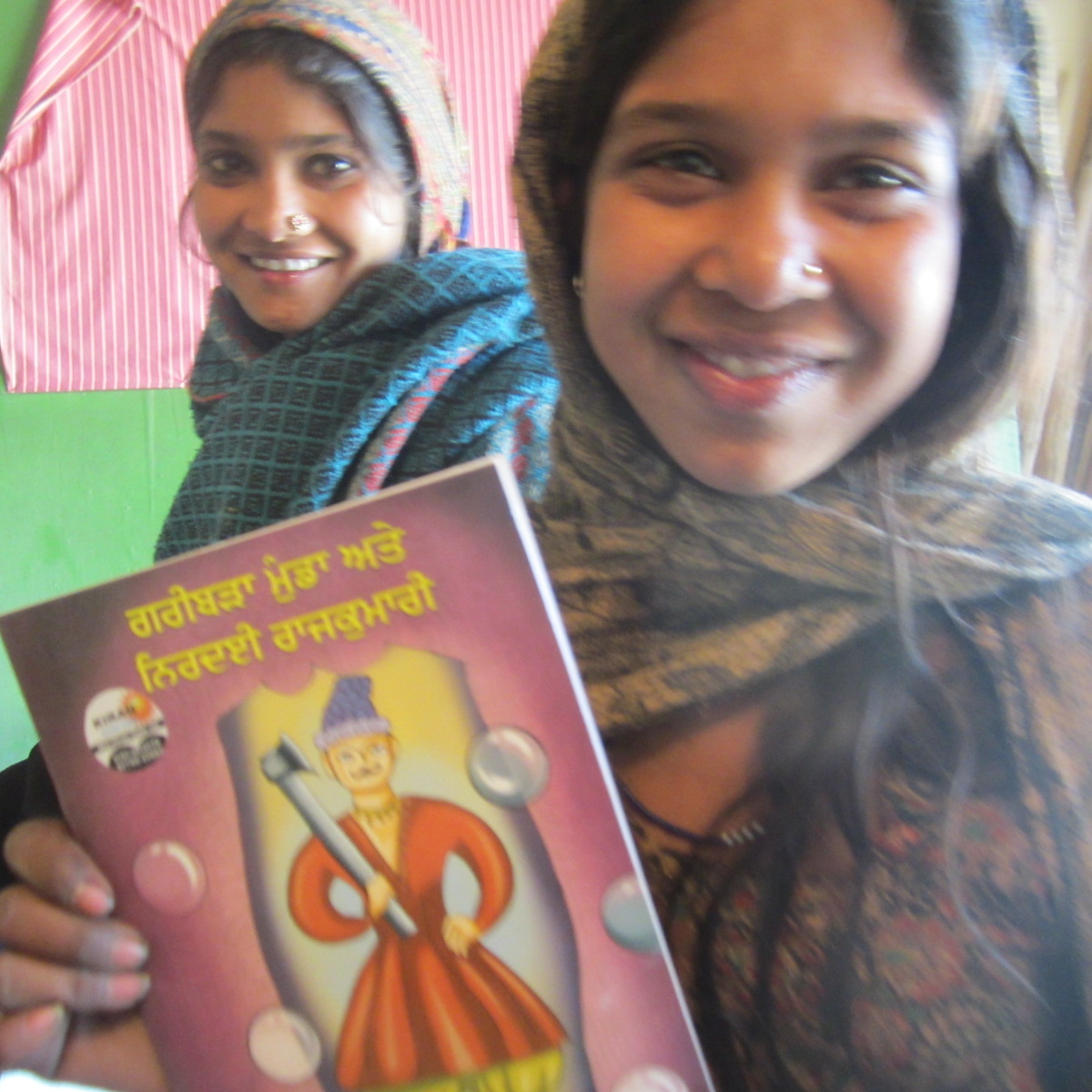
Elise with two of the young girls from the Paro migrant camp
IMG_3581
MCE Project Manager, Iria  
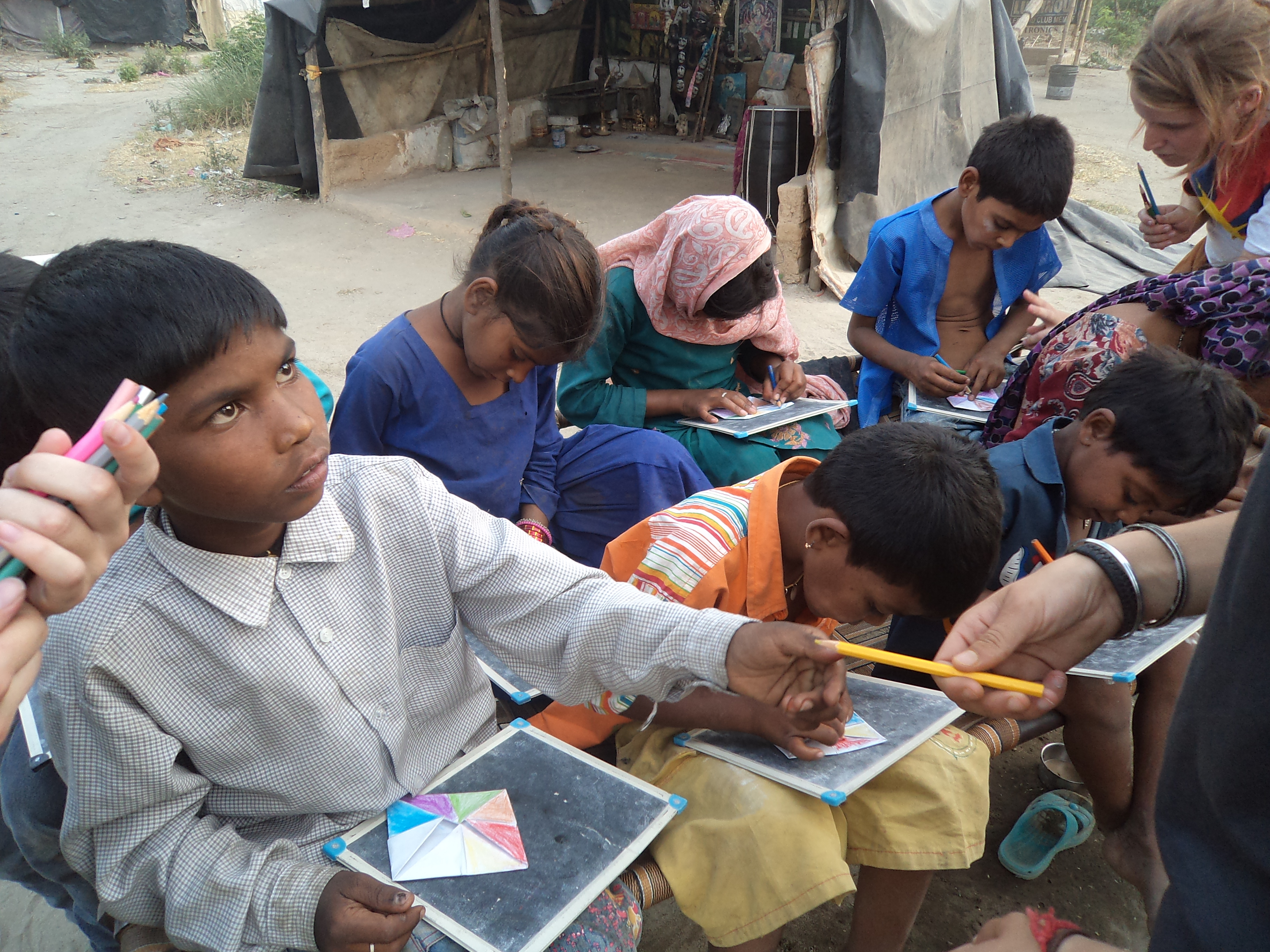
The English and math classes that we have been conducting with the young women of the Paro community since last fall have continuously been improving. We have created worksheets and introduced English reading skills as a part of our lesson plans. We originally thought it would be a great challenge for us to teach reading to the young women,  as they do not know how to read in Punjabi – their own language, but as always, the women have surprised us! They were happy to learn and they really put in a significant amount of effort into it. Now, after a month and a half, they recognize almost all of the sounds of the letters, they are able to read simple words, and are even able to write some of them.
IMG_3436
DSC01563
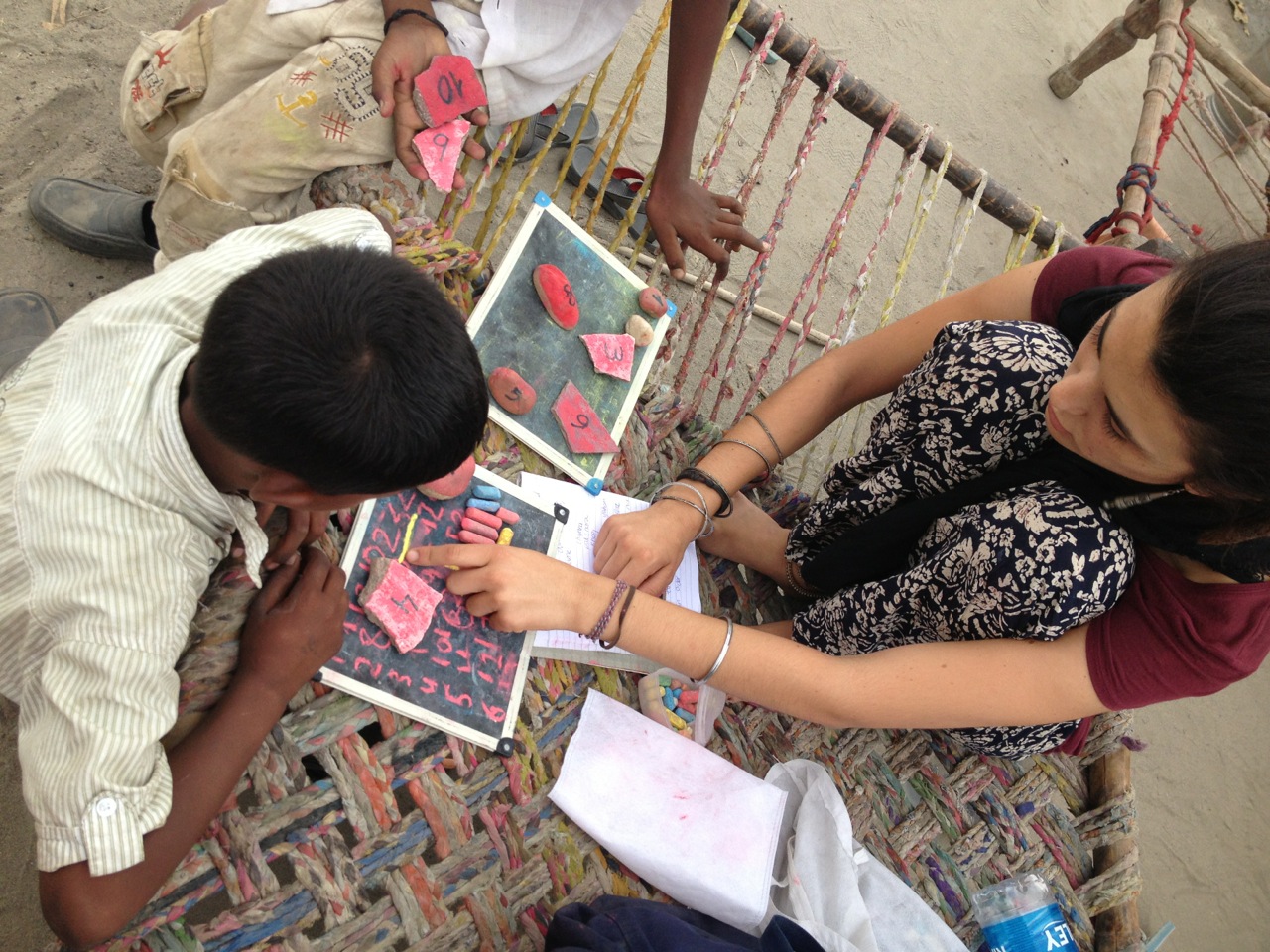
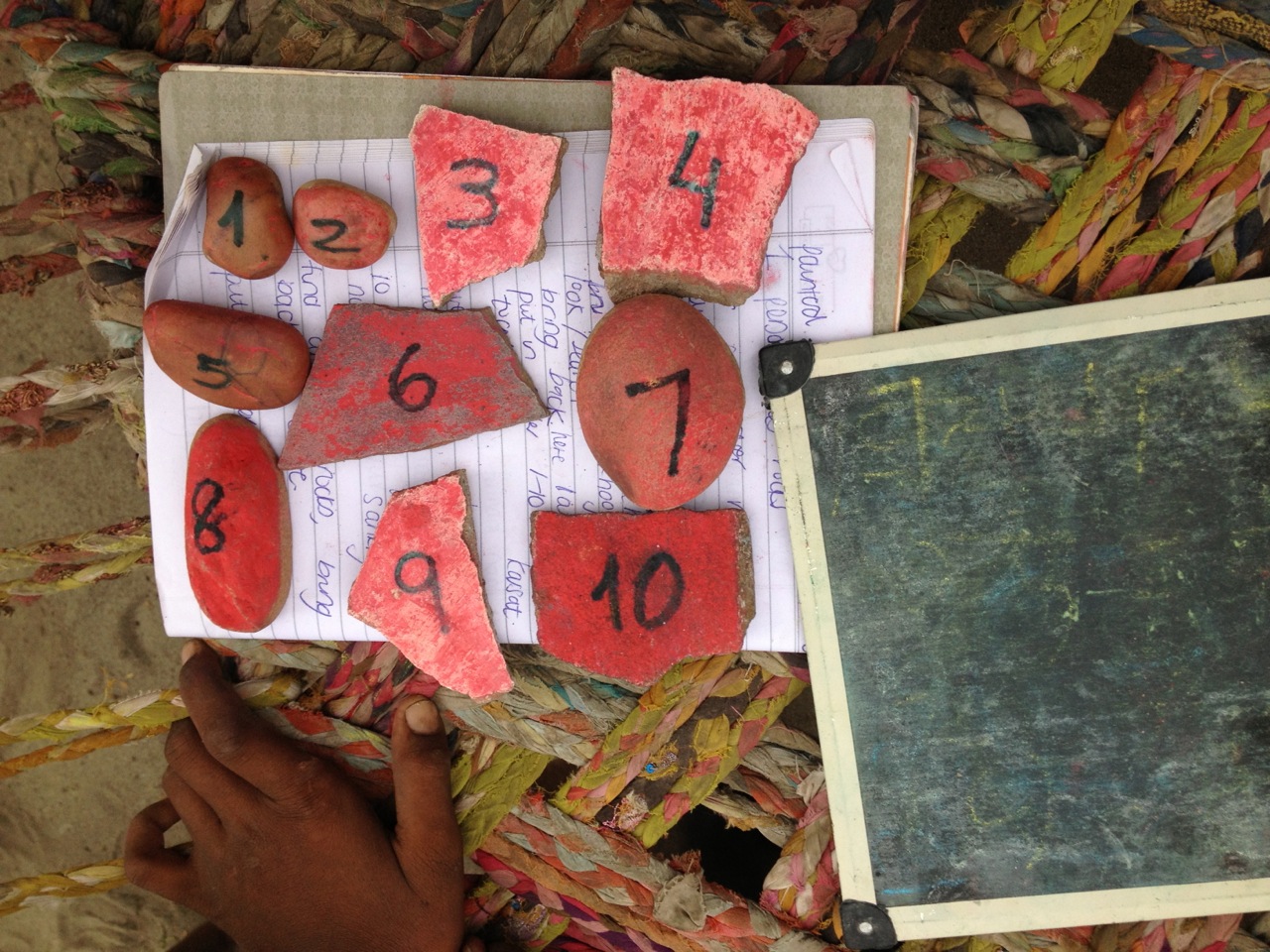
With math, we were also very pleasantly surprised. Addition was actually quite basic for them and with subtraction – they were able to understand it only after one lesson! So now we are just introducing more and more complex numbers, and they are starting to connect all of their knowledge. Moreover, something that is making us incredibly happy is seeing them help each other and teach each other at the camp. While we are not there, the older girls are teaching the numbers and the alphabet to younger children who don’t go to school
IMG_4334
Math lessons
Math lessons
Unfortunately, the health and hygiene situation is still a big problem at the camp. We are still continuing our efforts to improve the living standards. We have had a couple of situations with two malnourished young women that especially brought these issues to the forefront. They were both feeling very weak; one even fainted and was on an IV. So we did a small informal survey with them and found out that, at least one of them was only eating once a day, and it was a very small amount of food. Moreover, both of them are currently breastfeeding and thus it is even more crucial for them to eat properly. In this context, we decided to create a nutritional workshop to do with them. It was a totally successful project! Even without a translator and the language barriers, we were able to conduct these workshops and have the women understand what we were trying to impart to them. We did the workshops in two days, in two different sessions; in the morning with the young women and in the afternoon with the mothers. The latter was highly motivated and eager to implement these healthier nutritional models. These workshops also enabled us to converse about these topics more freely and for it to become a central theme in our work. Now the migrants are showing us what they cook, giving us a taste, and we are able to directly assess how they are eating. Just from these immediate results, we say that it was a great success. We are so proud of them and of ourselves.
DSC01603
Last, but not least, the micro-finance initiative has begun! We have recently just over a month ago created a Self Help Group for the women in both the Hariana and Paro camps! In this project the women are supposed to contribute either 2 rupees a day, 15 rupees a week, or roughly 50-60 rupees a month. Moreover, in Paro, the men were also very keen on this microfinance project, and so we also established a SHG for them as well. We are hoping through these micro-savings we can teach the migrants more effective ways of financial management and savings. Since usually, it is not for the lack of money, but rather their usage of money that is the biggest problem contributing to their poverty. Furthermore, through these SHGs we would like to enable the women to feel more economically empowered and less dependent on their families and husbands. Soon after these developments, we eventually began discussions of forming more personalized micro-finance projects with them in the near future, such as creating a chicken coop to produce and sell eggs.
DSC01568
Natalie with some of the members of the SHG
DSC01610
MCE Project Manager,
Iria Paz
Iria Paz, Spain
Project Manager – Marginalized Community EmpowermentJanauri, Punjab; Mar-June 2013

Wednesday, 5 December 2012

Education will lead to empowerment of Migrants community in Janauri village

Education will lead to empowerment of Migrants community in Janauri village

On the outskirts of Janauri village lies a small migrant camp that has all to often been overlooked by the Indian society. The cast system does not only limit access to basic provisions but also stifles children’s opportunities to dream to strive for a better way of life. Many children here are unable to comprehend that they can improve their lives, as they do not know any different. Through education the prejudice from society can be challenged, and the children can attempt to break free from the societal pre-determinations of how they should live their lives.

Learning English improves the children's self esteem

Education can lead to empowerment. This is our firm belief at EduCARE India and can be seen on the ground in Janauri. Currently the 4 interns as part of EduCARE India's international internship programme undertaking their volunteer work in India providing basic English and Math’s classes which Erica Vass from US and local beneficiary group believes will “serve them well into their adult lives”. These skills taught to the children will aid them in basic money management and also allow them the opportunity to compete for more jobs in the future. The classes currently are running twice a week and according to Erica are “of the utmost importance in terms of promoting empowerment for these children.”


The children are highly attentive during lessons and always enthusiastic. Currently the children receive 2 after-school English lessons a week, however this number may improve due to the demand for learning. The children’s willingness to learn in the migrant camp is staggering. Despite having significant other concerns such as access to basic amenities they are still determined to learn and we are therefore determined to teach.

Learning through games

Education therefore is being used as a tool of empowerment that can result in long-term tangible benefits for the migrant children in Janauri. Sydney J. Harris stated that the whole purpose of education was to turn mirrors into windows and this can be seen through the work in Janauri. Rather than the migrant children assessing their limitations and believing they cannot improve their lifestyles, education shows them what they can achieve.

Sunday, 11 November 2012

Better health = Better life

One of the important components of our projects are the health care and wellbeing of marginalised, poor, adolescents and women. Like many other developing countries, India too has several need gaps related to health care education and facilities. As India undergoes a transition from tradition medicine to modern medicine, there is an increasing lack of awareness of health issues and lack of access to health care facilities in many rural areas.

21 year old Jenny Bird and Kathryn Kaintz, both from the USA, and Kirsty Major from UK have spent the last several months initiating various projects in our Dharamashala cluster to address some of these health care issues at the grassroot level. "We have incorporated a few project activities aimed at addressing these need gaps, and to get to know and understand the health needs and concerns of the community better."
Jenny Bird conducting health surveys with some of the community women
Some current and past health care project activities include:
  • Community health care surveys to assess the health care issues and level of health care awareness in the community;
  • Adolescent health care awareness workshops in schools;
  • Nutrition, hygiene and wellbeing workshops during our Girls Club and Young Women Association meetings;
  • Connecting with the local public health care facilities including the traditional Ayurvedic hospitals to try to create good linkages with the rural communities, and; 
  • Community sanitation and waste management education and activities. 
  • Annual medical check up and record-keeping for the marginalised migrant community

Medical health camp with the migrant women

Thursday, 15 March 2012

Hello everyone!!
My name is Ryusuke, from Japan.
I`m one of the interns at EduCARE India and also
REstore manager in Janauri.


This time I`d like to introduce my project.
On March 9th, I held an event at migrant`s community Paro.

In Janauri and Paro, some migrants from Rajasthan live there and make communities. They pick some garbage up and sell for living. Migrant`s children also have to work because their income is very low. So our center is facilitating a MCE program. MCE stands for Marginalised Community Empowerment. In that program, we try to teach the children about nutrition, hygiene, English, Punjabi, and so on.

Through my internship, I found they have really dangerous problem. I found this burned toothpaste-tube in their community. They seem to burn these tubes, plastic-bags, and plastic-tray, and they breathe these smoke. That`s very dangerous for their health. So, I thought I have to teach them what is good or bad for burning. Moreover, I want them to use candles as cleaner energy.


This time, we went to their community and asked them some quiz questions: what is good or bad for burning. Besides, I told a story, showing their children some pictures. This story is about a boy`s life. The message is “always try to do your best” and “You can change your life for yourself”.
At first, only a few people took part in my program, but many people got interested in my project gradually. Children could easily understand the story due to local people`s help with translation.

After telling the story, we talked with the community`s leader about education. Through this conversation, we found that Punjab state government tries to provide all children with some opportunities to education for free.

Moreover, one of the adults in that community seems to be interested in getting those chances. So, there are some gaps between them. However, if we can remove these gaps, we will be able to help migrant`s children go to school.

But, I was so sad when I asked the kids whether you`re interested in school or not, their answers ware “No”. Through this moment, I really thought talking with local people is really important to do some activities.

Next, I asked them some quiz questions about what is good or bad for burning. 3 children and many adults took part in this program.
At first, they answer paper is bad for burning because it is really dirty and plastic-bag is good for burning. But when I finished asking all the questions, they can answer accurately.


When I show them candles, one of the adults told us they tried to buy candles before and they really want to know how to make candles. So, we made candles with migrant`s children and adults at REstore on March 12th.

Monday, 19 December 2011

Moving with the Migrants

Our last Wednesday activity took us to our Migrant Community in Paro. Living on Government land they face eviction at any given time - 2 weeks ago the day came when they were asked to move.

This means packing up all their belongings including Huts, Tents and Facilities, resettling at another campsite. Fortunately enough, they were able to find another spot close to their old home. Wednesday we went there helping to clear the land, uprooting trees and shrubs, so they can rebuild their homes. An exhausting experience, during which we learned that experience with a shovel or axe can not be outdone by strengh alone.


Friday, 9 September 2011

New vegetable garden for the Adampur Trash Pickers!


On Wednesday, September 7th ViKAS Centre interns had the exciting new assignment of initiating a farm plot in the migrant community in Adampur. We have been working with the migrant community of 31 members since April 2011 on various issues of health, nutrition, hygiene, sanitation, economic sustainability, waste management and education.  They face a complex range of social, health and environmental issues that we seek to address in a holistic and integrated way to improve their overall living conditions through building a partnership of trust and respect. One of the main problems faced in this community is poor or inadequate nutrition.  Many members only eat once a day in order to save money and their level of awareness on a balanced diet is limited.  Therefore, as a first step at improving their nutrition levels and awareness we helped them clear the land for planting of a range of vegetables.
The Land before cultivation
To start the job, Interns took turns cutting grass and weeds in order to clear a square plot of land located just behind the community. This task was at times challenging due to the heat but everyone persevered.
Mr B, Dan, Yvan and Hiroki all hard at work
 Once the land was cleared interns began planting vegetable seeds. Some of these included radish, spinach, peas, and chili.

Gulshan,Alex,Suzy and Dan planting seeds
Unfortunately, our organic farming team was away at a workshop and unable to give their advice, but the rest of the interns came together and used their collective knowledge to plant successfully.  However, our organic farm team will be visiting the plot later this week to give their inputs and advice on companion planting, organic pest management and weed control.

                  The next step for the land is to shield it from unwanted animals. Even while the interns were planting seeds, a heard of water buffalo tried to intrude, but we made sure that they got the message and scared them away, as well as spoke to their owner about keeping them off this plot of land.

The current crop of EduCARE interns after a hard days work
Names from back row left to Right, Yvan,Dan, Liz, Nick, Julia, hiroki, Alvin, Rachael, Alex,
middle row: Rieke, Tono, Yuki, Shantie,
front row: Gulshan, Suzi


             Overall, the day was a success and if the community tends to the land with our help and guidance, it should thrive with vegetables for them in the future. This is a first step to help improve their diet and nutrition levels as well as save them money for the future. We hope also in the coming weeks to extend this plot to include more vegetables. We will be sure to keep you updated on the progress of this project!

Wednesday, 24 August 2011

Health Day in Adampur: Trash Pickers Visit Local Health Facilities

Hannah Wolkwitz, coordinator of health day, spent weeks organizing transportation, supervision, and free check-ups with local hospitals for the Trash Pickers community in Adampur.  The health day was realized several days before her departure from EduCARE. The Trash Pickers community suffer from constant health problems due to poor sanitation, water, and other conditions in which they live. The goal for the health day was to complete a general physical for the majority of the community, numbering around thirty people.
Interns accompanied three to five individuals from the community to two facilities. EduCARE volunteers were responsible for recording health information and ensuring individuals received free medicine.  The Lion’s Club offered free eye examinations and diabetes tests. The community collected basic eye medication and, for those who needed it, spectacles. The Civil Hospital provided a urine test, weight and height measurements, and blood tests for iron, along with iron supplements.  


Civil Hospital employees checking blood pressure.
An English student and friend of EduCARE, Sukhjinder Singh, extended a helping hand, as usual, by transporting, in multiple shifts, the community to both locations. After initial disorganization and delay at the Lion’s Club during the first shift, interns developed a system to oversee that each person would be attended to. At the Civil Hospital the children bravely bared finger pricks. The community’s dog, Tiger, accompanied them for moral support, at times over-extending that support by lounging in the lobby.
The day required the attention of each member of the EduCARE team. As a much anticipated event and one in planning for awhile, it proved to be quite successful for a community plagued by a plethora of health concerns. The information recorded will be of avail to assist the community in understanding its own health and sanitation issues, as well as to go on record for future interns working to improve the general health of the Trash Pickers. Furthermore, the day spent in two health facilities will hopefully spread awareness among the community that there are local resources available to them that should be utilized.


Krishan receives a free eye examination at the Lion's Club.


Thursday, 9 June 2011

Making a stove, to make a difference!

Finishing touches - smoothing out the stove

One of the problems that the migrant communities face within daily life is the access to combustible material (primarily wood) in order to burn for cooking purposes. In India, you often see communities that heard cattle making patties out of the cow or buffalo dung, which they then dry out to use as fuel. However, with the Trash Picker community in Adampur, they have few assets, and certainly do not have the finances to procure the most cherished of animals, a cow. With limited resources and little availability to cow excrement, we had to come up with a solution to try and make cooking less burdensome.

Here at ViKAS we are pretty resourceful folk, although, it is still crazy to think that you can make a fully working, fuel efficient stove in under two hours out of, well... poo, mainly. Structurally, all you need is two plastic buckets, to form the basic mould of stove around. Then for the material: natural clay (5 buckets per stove) FRESH cow dung (3 buckets) natural sand (1 bucket) and water... Oh, and of course, lots of enthusiastic interns, and some local know-how!

Every stove has to start somewhere...
So, it all sounds simple enough. Here is the procedure:
  1. Set the wider of the plastic buckets on its end, and the narrower bucket perpendicular against it (this will form the negative space where the fuel is inserted and burned).
  2. Combine clay, dung, and sand, and mix it at first with a shovel, then thoroughly by hand until there is an even consistency. Add small amounts of water as needed, to bind. 
  3. Take 'snowballs' of the mixture and throw it against the two-bucket structure in order to expel all the air from the material as you build. 
  4. Hold boards around the area to define the stove's shape as you throw.
  5. 4-6" up, place a stick perpendicular to the upright plastic bucket (this will form the negative space where the smoke will escape from - a chimney).
  6. Continue throwing balls of the mixture, and sculpting with the boards until the stove reaches 8-12" tall.
  7. Place the family cooking pot on top of the upright plastic bucket and continue throwing the mixture around the base of the pot - to form a custom fit of the pot to the stove. 
  8. Smooth out the shape of the stove with boards, and by hand, decorate if you want!
  9. Allow the stove to dry for two weeks with no use whatsoever. Cover well with tarpaulin in order to prevent any moisture getting to the completed stove.
The finished article. Now to let it dry!!
This was the process that we followed for the first of our stoves that we built, which turned out to be a great success. We managed to engage with the local community, as our willingness was met by the whole of the Trash Picker community who came over and offered advice, suggestions and praise! 

Everyone involved - the community loving the new stove
Looking forward, hopefully we can replicate this activity with the marginalized communities that we work with in both Janauri and Dosarka, as well as amongst the Snake Charmer's who are settled in Adampur too. With this project, involvement is key, as the more the community helps, the more they will learn, and the more they will gain a sense of belonging over the end product!

And for us, well, we are just pleased that we can help introduce:
  • A 60-70% reduction in fuel consumption
  • Faster cooking times
  • A reduction in carbon emissions 
  • Fuel cost savings
  • Less time spent collecting wood for fuel
  • Forest tree conservation

Friday, 8 April 2011

Working with marginalized communities

Very basic living within marginalized communities
We have been visiting two migrant camps in Adampur for a few months now. The migrants here face a range of complex social, economic, health and discrimination issues. We have been using our visits to get to know the community and their needs using applied research principles. It has been a wonderful experience to spend most days eating, playing and dancing with the migrant community, getting to know them and building mutual trust. 

From this interaction we have come up with a few ideas and plans to improve their social and economic wellbeing. We are using a holistic approach that addresses their issues in an integrated way. We envisage that these approaches will include microfinance, health assessments, sanitation, swash and organic farming.


Rachael and Isis with the migrant children
It is exciting to be establishing and creating this project from scratch in such a broad way. We look forward to letting things naturally evolve and develop as we get to know the communities deeper and working with them to help improve their living conditions.